

Editor’s Brief
In an era where synthetic media can replicate human logic, style, and aesthetics, the act of keeping a personal diary has shifted from a reflective hobby to a critical necessity for maintaining one's identity. By utilizing low-friction voice-to-text tools, individuals can bypass the "internal editor" that sanitizes thoughts, creating a raw, unpolished record of existence that serves as a human anchor against the encroaching tide of AI-generated content.
Key Takeaways
- The Authenticity Crisis:** As AI becomes capable of mimicking our professional output and creative voice, the only remaining "unique" territory is the unedited, private record of our daily experiences.
- Voice Over Text:** Traditional writing often triggers a self-censorship mechanism. Using voice-to-text captures immediate emotion and "messy" truths that are lost when we pause to polish a sentence.
- Resisting Cognitive Compression:** Journaling fights the psychological phenomenon where the brain "compresses" repetitive adult life into a blur, instead highlighting the unique "texture" of each day.
- AI as Analyst, Not Author:** AI should be used as a tool for retrospective analysis—identifying patterns in mood or behavior—rather than for "beautifying" or generating the diary entries themselves.
Editor’s Brief
Developer journaling as a productivity and reflection habit is one of those ideas that sounds self-evident until the AI era reframes its urgency entirely. Digital Life Khazik’s essay, originally published on X in March 2026, argues that the unrecorded life is a life that never fully happened — and that personal documentation is now less a lifestyle choice than an act of identity preservation. The piece draws on the writer Ma Boyong’s factual diary method, the broadcaster Luo Zhenyu’s video diary practice, and philosopher Henri Bergson’s theory of subjective time compression to build a case that is both practical and quietly alarming. What distinguishes this piece from typical productivity advice is its honesty about the author’s own failure to persist, and the low-friction voice-dictation method offered as a genuine fix.
Key Takeaways
- The dictation hack beats typing. Typing activates an internal editor that sanitizes your thoughts in real time. Speaking into your phone’s memo app with voice-to-text preserves raw, unfiltered emotion and reduces the time cost to three to five minutes per day.
- Record facts, not feelings. The “Yu Man Tang” journaling method — borrowed from historian Ma Boyong — prioritises specific, verifiable entries: who you met, what you ate, what you read. Concrete details trigger sensory memory far more reliably than vague sentiment does.
- AI for analysis, never for authorship. Using Claude or any LLM to polish diary entries destroys the human signature that makes the record valuable. The correct use is retrospective: feed a month of raw entries and ask for pattern recognition across mood, energy, or recurring stressors.
- Brain compression is real and accelerates with routine. Bergson’s concept of subjective duration shows that repetitive days get compressed into near-nothingness in memory. Developer journaling as a daily reflection habit forces you to notice what was different today — effectively slowing down the subjective experience of time.
- Performative output is not personal record. Publishing articles, posting on social media, and sending Slack updates are all designed for an audience. None of it captures the private texture of your actual experience. A diary is the only output that is purely for you.
- Identity is a narrative, not a fixed state. The author’s central philosophical claim — that “you” exist because you remember — has direct consequences for anyone whose creative and analytical output is increasingly co-produced with AI. The journal is the one document that remains irreducibly yours.
- Low ritual is the persistence prerequisite. Every system of journaling that demands a dedicated time, a special notebook, or a structured format introduces enough friction to ensure failure. Voice-first, memo-app-based journaling strips that ritual down to the minimum viable habit.
NovVista Editorial Comment
Khazik’s essay arrives at an interesting moment for anyone who has been watching what AI is actually doing to developer and creator workflows from the inside. The productivity argument for developer journaling as a reflection habit is straightforward and well-made. But the more interesting argument buried in this piece is an identity argument, and it deserves more direct attention than it gets in the original thread.
The concern is not that AI makes us lazy. The concern is that AI makes us legible to ourselves in the wrong register. When you use a language model to sharpen an argument, draft a strategy memo, or generate a topic angle, the output is coherent, defensible, and often better-performing than what you would have written alone. The problem is that “better-performing” is measured against an external audience. Your own private signal — what you actually think, before any optimisation for reception — gets no representation in that process. Repeat that dynamic across enough weeks and you start to lose the thread of what you genuinely believe versus what you have learned to produce effectively.
This is where the developer journaling productivity reflection habit becomes a form of infrastructure rather than a self-improvement project. The journal is not a place to be profound. It is a place to be unoptimised. The roughness is the point. Raw voice dictation that captures your actual cadence of thought — including the hesitations, the redundant phrases, the petty grievances — is creating a data set that no AI can reconstruct after the fact. It is the one record that proves the human was actually present.
Khazik’s suggestion that you can then use AI to analyse this raw material retrospectively is well-calibrated. Pattern recognition across weeks of low-quality first-person notes is exactly the kind of task large language models handle well. Discovering that you consistently underestimate Tuesday, or that a specific type of meeting reliably tanks your afternoon output, is genuinely useful operational intelligence for any developer or indie maker. The key constraint is that the input has to be real. If the entries are already AI-polished, the analytical layer is reading a simulation of your experience, not the experience itself.
For NovVista readers working in technical roles, we would add one practical extension to Khazik’s method: treat the journal as a decision log, not just an emotional record. Note the technical choices you made today and the reasoning behind them. Note what you were uncertain about. Note which assumptions you are carrying into tomorrow. Developers make dozens of micro-decisions per session that are rarely documented anywhere. A three-minute voice note that captures your current mental model of a problem is worth more to your future self than any retrospective reconstruction. That combination — emotional texture plus technical reasoning — is what turns a journaling productivity reflection habit into a genuine professional asset.
Editor’s Brief
Digital Life Khazik argues that in an era where synthetic content is everywhere, keeping a personal diary serves as a vital "human anchor." By using low-friction methods like voice-to-text dictation, individuals can bypass their internal filters to record raw, unpolished reality—ensuring their personal history isn't lost to the "compression" of time or the polish of algorithms.
Key Takeaways
- The Dictation Hack:** Typing triggers an "internal editor" that sanitizes and beautifies thoughts; speaking into a phone’s memo app preserves raw, honest emotion and saves time.
- The "Yu Man Tang" Method:** Focus on recording specific facts, people met, and books read rather than abstract reflections, creating a high-density log of actual life.
- AI as a Mirror, Not a Ghostwriter:** AI should never be used to polish or write diary entries, as that destroys the "human signature." Instead, use it only to analyze old entries for patterns and recurring themes.
- Fighting Time Compression:** As we age, the brain "compresses" repetitive days into nothingness. Daily recording forces the mind to notice unique details, effectively slowing down the subjective experience of time.
Editorial Comment
There is a specific kind of exhaustion that comes from living a "documented" life that isn't actually a "recorded" one. We post to Instagram, we send updates on Slack, and we fire off tweets, but as Khazik points out, almost all of that output is performative. It is designed for an audience. When you look back at your digital footprint from three years ago, you often find a collection of polished highlights that feel like they belong to a stranger. The "you" that was tired, the "you" that was irrationally angry at a colleague, or the "you" that was moved by a seagull in Barcelona—that person is usually missing.
As someone who has covered the tech beat for a long time, I find Khazik’s pivot toward the "analog" habit of journaling—albeit through digital tools—deeply grounding. We are currently flooded with tools that promise to make our writing better, our emails faster, and our thoughts clearer. But there is a hidden cost to all this optimization: the loss of the "rough edges" that make us human. If you let an algorithm polish your diary, you aren't keeping a record; you’re commissioning a PR report of your own life.
The most practical takeaway here is the distinction between typing and speaking. If you sit down at a keyboard to "write a diary," you immediately feel the weight of the blank page. You start worrying about grammar, or you catch yourself phrasing things so they don't sound "too whiny." This is the "internal editor" Khazik mentions. By switching to voice-to-text, you bypass that gatekeeper. You talk to your phone like you’re venting to a friend. The resulting text is messy, full of "ums," and perhaps a bit repetitive, but it is undeniably yours. It captures the cadence of your actual mind, not the version of your mind you want the world to see.
Khazik’s reference to Ma Boyong’s "factual" style is also a necessary correction for those who think a diary needs to be a philosophical treatise. Most people quit journaling because they feel they have nothing "profound" to say. The Yu Man Tang method removes that hurdle. Don't worry about being profound; just be specific. What did you eat? Who did you argue with? What was the weather like? These small, "useless" facts are the anchors that prevent your memories from drifting away. Ten years from now, a paragraph about a specific meal in a specific city will trigger a sensory memory that a generic "I felt happy today" never could.
Finally, we have to address the "AI paradox." We are using more technology than ever to capture our lives, yet we feel more disconnected from our own histories. Khazik suggests a healthy boundary: use the technology for the heavy lifting of analysis, but never for the act of creation. Let the AI read your last six months of notes to tell you that you seem to get stressed every Tuesday—that’s a useful utility. But don’t let it write the notes for you.
In a world where we can generate a thousand words of perfect prose with a single prompt, the only thing that will retain value is the stuff that *can't* be generated: your specific, unpolished, and often mundane experience of being alive. Start talking to your notes app. Don't worry about the typos. Just make sure that when you look back in a decade, you find yourself there, and not just a collection of curated data points.
Introduction
The following content is compiled by NOVSITA in combination with X/social media public content and is for reading and research reference only.
focus
- I have been in Barcelona on business for the past two days.
- I finally persisted in keeping a diary for several days.
Remark
For parts involving rules, benefits or judgments, please refer to the original expression and latest official information of Digital Life Kazik.
Editorial comments
This article “X Import: Digital Life Khazik – In the AI Era, why do I highly recommend you start keeping a diary?” 》from X social platform, written by Digital Life Kazik. Judging from the completeness of the content, the density of key information given in the original text is relatively high, especially in the core conclusions and action suggestions, which are highly implementable. I have been in Barcelona on business for the past two days. I finally persisted in keeping a diary for several days. I have always had the idea of starting a diary before, and I have written some intermittently, but I have not persisted. But now, what really made me start to rethink my diary are two people. One is Ma Boyong. On December 28, 2024, he decided to start writing a diary again. For someone like him who writes stories until they take off, he can actually say that my brain is the best hard drive. However, he chose to keep a diary honestly. The reason is very simple, because… For readers, its most direct value is not “knowing a new point of view”, but being able to quickly see the conditions, boundaries and potential costs behind the point of view. If this content is broken down into verifiable judgments, it would at least include the following levels: I have been on a business trip in Barcelona these two days. ; I finally persisted in keeping a diary for several days. . Among these judgments, the conclusion part is often the easiest to disseminate, but what really determines the practicality is whether the premise assumptions are established, whether the sample is sufficient, and whether the time window matches. We recommend that readers, when quoting this type of information, give priority to checking the data source, release time and whether there are differences in platform environments, to avoid mistaking “scenario-based experience” for “universal rules.” From an industry impact perspective, this type of content usually has a short-term guiding effect on product strategy, operational rhythm, and resource investment, especially in topics such as AI, development tools, growth, and commercialization. From an editorial perspective, we pay more attention to “whether it can withstand subsequent fact testing”: first, whether the results can be reproduced, second, whether the method can be transferred, and third, whether the cost is affordable. The source is x.com, and readers are advised to use it as one of the inputs for decision-making, not the only basis. Finally, I would like to give a practical suggestion: If you are ready to take action based on this, you can first conduct a small-scale verification, and then gradually expand investment based on feedback; if the original article involves revenue, policy, compliance or platform rules, please refer to the latest official announcement and retain the rollback plan. The significance of reprinting is to improve the efficiency of information circulation, but the real value of content is formed in secondary judgment and localization practice. Based on this principle, the editorial comments accompanying this article will continue to emphasize verifiability, boundary awareness, and risk control to help you turn “visible information” into “implementable cognition.”
I have been in Barcelona on business for the past two days.
I finally persisted in keeping a diary for several days.
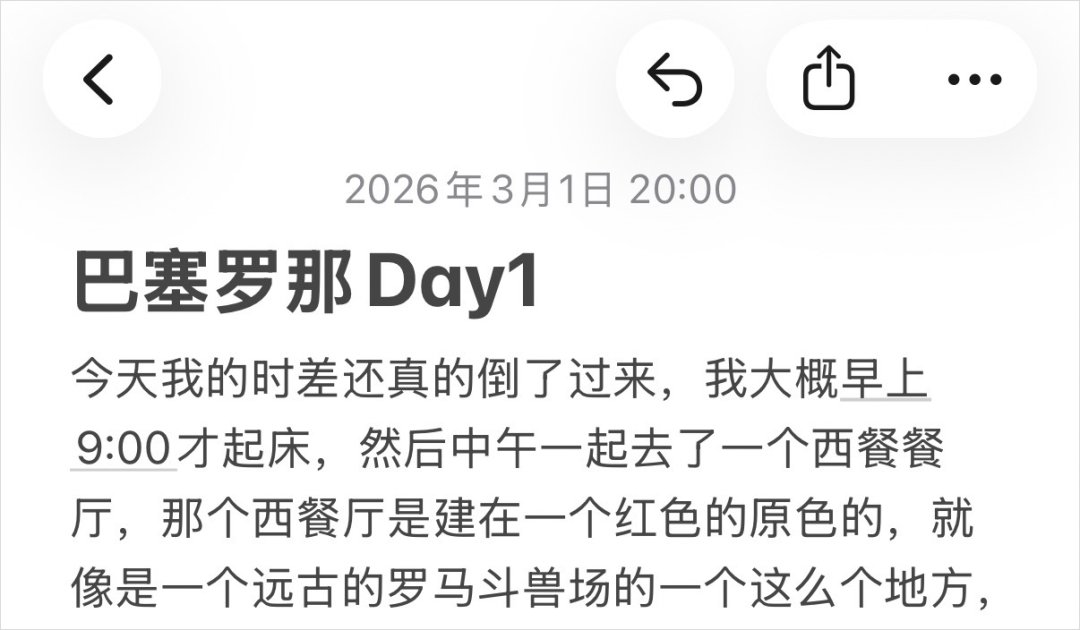
I have always had the idea of starting a diary before, and I have written some intermittently, but I have not persisted. But now, what really made me start to rethink my diary are two people.
One is Ma Boyong.
On December 28, 2024, he decided to start writing a diary again.
For someone like him who writes stories until they take off, he can actually say that my brain is the best hard drive. However, he chose to keep a diary honestly. The reason is also very simple, because memory is unreliable and time is too dense.
The other is Luo Zhenyu.
He started recording a video diary every day on the sixth day of the Lunar New Year, facing the camera as if chatting with friends, expressing his daily thoughts and emotions and keeping them in his files. At that moment, you will realize directly that there are some things that if you don’t leave them on the spot, you won’t be able to get them back in two days.

One of them has been telling stories for half his life, and the other has been making content for half his life. Although they already have strong improvisational expression skills, they are both seriously making up for this lesson and the lesson of recording.
I want to make a point.
In the AI era, diary is the true anchor of your existence in this world.
I actually thought about it carefully these past two days, and I found that in the past three years, I have experienced too many things, met too many people, and had too many ideas, but very few of them have really been left behind.
I looked through my chat history, my circle of friends, and my memos, but I could find very few fragments.
Most of the days passed like this, flowing away like water without leaving even a water stain.
Do you think I’m busy? It was so busy that I took off. Do you think I am producing content every day? Yes, official accounts are being written, videos are being shot, live broadcasts are being done, and companies are opening up. I output a lot of stuff, but to be honest, those are for others to see, and they are content that I think is valuable to others.
What about my own?
The things I have experienced myself, those nights when I was still in tears at six in the morning, those moments when I was sitting alone in a car in a daze after arguing with others until my face turned red, those moments when I was suddenly hit by a message from a reader, and I burst into tears but held back. These things, it seems, are nowhere to be found now.
It’s not that they are unimportant, but I think they are too routine and not worth remembering.
But now I think it’s wrong.
It is precisely those things that you think are too everyday, which are the evidence that you have truly lived in this life.
Yesterday afternoon I came out of the hotel from the Glory press conference and walked on the streets of Barcelona. On Sunday, all the shops on the street were closed, because Spain is closed on Sundays. Even the shops are closed on Sundays. The streets were very quiet. Occasionally, people walked their dogs, and some people sat on the benches on the roadside to bask in the sun. Next door is the Camp Nou stadium, Barcelona’s home stadium, but it is being renovated.
Then several birds flew overhead.
I told my friend: Damn, this big bird is pretty good-looking.
My friend said: That’s not a big bird, it’s a seagull. We’re not very far from the sea.
At that moment, I suddenly felt a long-lost sense of tranquility.
A sense of tranquility away from AI and hustle and bustle.
That kind of feeling cannot be given to me by any photo, any text, or any AI-generated content.
I didn’t choose that seagull to fly by at that moment. I didn’t plan what I wanted to feel at that moment, but that thing hit me at that moment.
At that moment, I felt that I needed to record what I saw and felt today, and record my life this day.
My recording method is based on Ma Boyong’s, which is very simple.
Just follow the style of “Yuemantang Diary”:
Every detail must be written down, jade and scraps of gold accumulated, a few examples a day, one thing at a time, what books I read, who I met, and what I encountered were all recorded directly on a daily basis. The most important thing is to record things, followed by discussion.
In human terms, write more facts, record them one by one, and only record facts and insights.
So, how exactly do you get started?
I know that at this point, some people may start to think that I understand all the principles you said, but I am just lazy. It is too troublesome to write a diary every day. What should I do if I can’t persist?
To be honest, I’m worried that I won’t be able to hold on.
So in the past two days, I have studied a plan that has a very low threshold for me, and it can also exercise my expressive skills. It is a combination of Ma Boyong and Luo Zhenyu. I feel good at the moment and the cost is extremely low. I would like to share it with everyone.
The core principle is just one:
Speak, don’t write.
When many people hear the words “keeping a diary”, the picture that comes to their mind is of sitting at a desk, opening a notebook or document, and typing word by word. This picture itself brings huge psychological pressure.
Don’t do this.
When you have something you want to remember, you take out your phone, open Notes, switch to voice input, and start talking.
You don’t need to use any so-called AI products, and you don’t need to make some messy and complicated notes. Just use your mobile phone memo.

Being able to persist is the most important thing.
Open the memo, just like you send a voice message to a friend. Say what comes to mind. “What did you do today? Who did you meet? There’s something that annoys me…” That’s it. After two or three minutes of speaking, the voice was automatically converted into text.
The voice input method I use now is the beanbao input method, and the voice recognition is the most accurate so far.
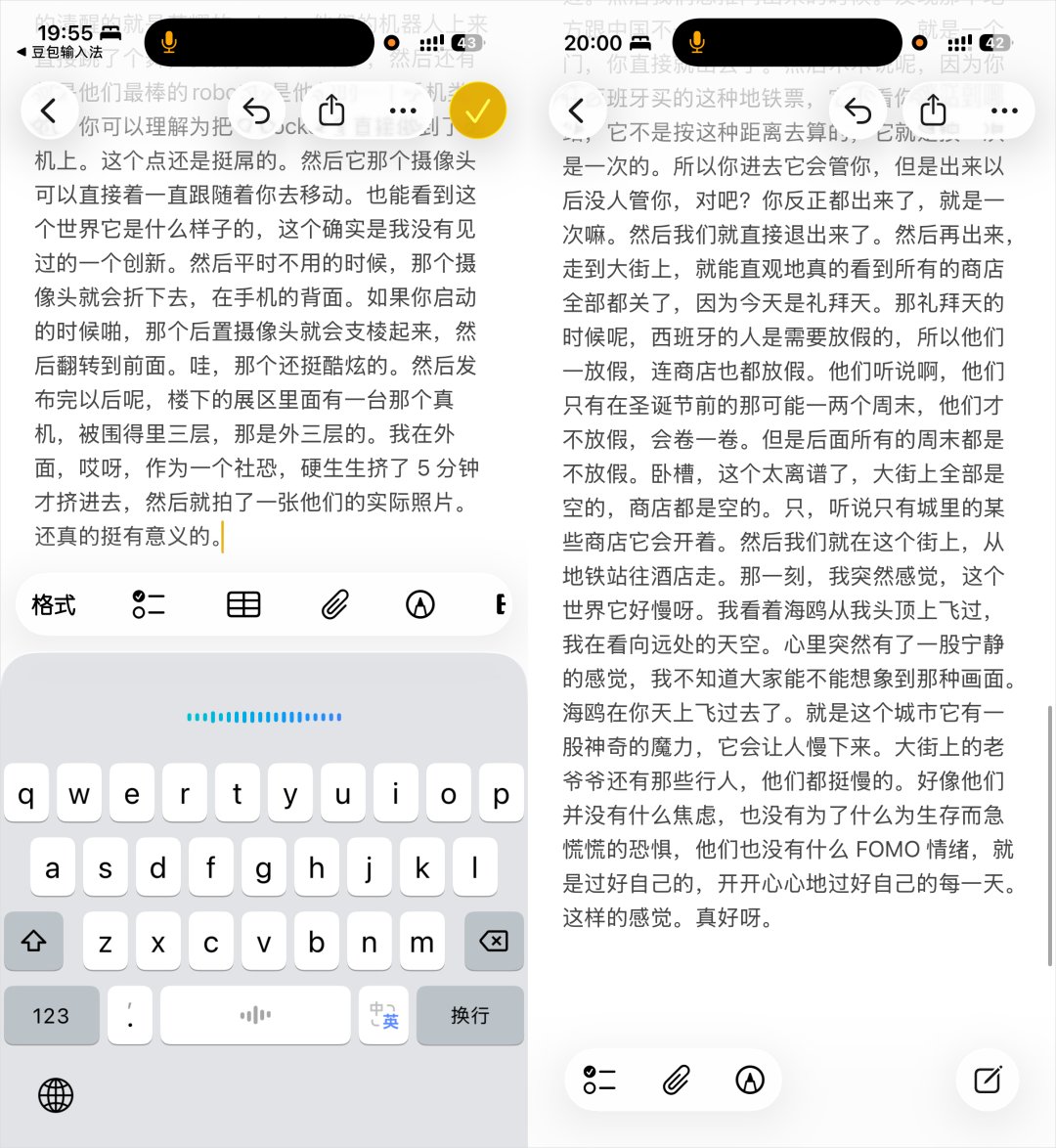
This is not an advertisement, but this is indeed one of the few voice input methods that can accurately recognize words such as Pocket 3, FOMO, and Gemini.
You must speak, don’t write.
There is a fundamental difference between dictation and typing in the matter of diary.
I type a lot, so one thing I know very well is that when you actually type, you are not just recording your thoughts, you are also editing your thoughts.
You typed a sentence and you feel it doesn’t make sense, delete it and rewrite it.
You want to express a feeling, but after typing it you feel it’s too pretentious, so change it to a more restrained version. For example, you originally wanted to write “That bad pen really pissed me off today”, but halfway through typing, you felt that it was too emotional, so you changed it to “There was some friction when communicating with XX today.”
When typing, there is an editor working in real time in your brain, which will help you polish, trim, beautify, and restrain.
This editor is useful when you write a public account or write a lot of external content, but when you write a diary, it is your worst enemy.
And when you hold down the voice button and start speaking, you don’t have time to edit, the words have already been spoken. You can’t delete them and start over like typing. You can only speak forward.
Moreover, speaking is much faster than typing, which can greatly reduce your time. At the same time, it can also exercise your language expression skills. Many of us are actually not good at speaking.
My current habit is that if it is convenient during the day, I will open the memo anytime and anywhere to record the facts and feelings at the moment. When I am lying in bed and getting ready to go to bed at night, I will open the memo, press and hold the voice button, make up for what I did not remember today, and then say a few words casually, and I will finish it in three to five minutes at most.
And sometimes, you will find a very interesting phenomenon. It’s just that you thought you had nothing to say today, but once you started talking, you couldn’t stop talking.
When it comes to diaries, I actually think the biggest enemy is the sense of ritual. Once you add a sense of ritual to it, I think its death is not far away.
Of course, many people will also ask whether I should use those AI polishing methods to optimize my diary.
My recommendation is, don’t.
The value of a diary does not lie in the quality of the writing, but in the authenticity of the writing.
Your records that are not fluent, have grammatical errors, are inconsistent, and even contain typos are your truest state. They are like recordings, recordings that will not be modified. If you play them back decades later, you can still hear the heartbeat at that time.
But if you let AI help you beautify it, it is no longer a recording, it is a cover. The key is accurate and the timbre is good, but it is no longer your voice.
Of course, I think it’s OK to just eliminate the pure oral habit of um um ah ah ah.
There is another correct use of AI that I think is particularly good, which is review.
You can throw your diary for this week or month to Claude and let it do a monthly review for you. It will help you discover some patterns that you are not aware of. For example, you are at your lowest mood every Wednesday. For example, you become anxious when a certain project is mentioned. For example, you have actually done a lot of things this month but always feel that you have done nothing.
This usage is very good, because the role of AI here is not to help you polish the content, but to help you read and summarize, and to help you find clues from those messy records.
But the premise is that the original material must be your own.
If even the original materials are written by AI, then AI doing the review for you will be like AI reading what it wrote itself, and you will not be involved in the whole chain at all.
Finally, I still want to say something.
The significance of keeping a diary in the AI era.
In the AI era, diary may not just be a matter of good habits.
It’s becoming a necessity, and one that’s more costly the later you realize it.
Luo Zhenyu mentioned a sentence in his video diary, which was written by the writer Liu Heng.
“After artificial intelligence can replace almost all human expression, the only thing that will survive is the unique expression of individual human beings about their lives.”
I have been working on AI content for three years, and I probably know better than most people what AI can do.
I have used AI to write strategic plans, do data analysis, create video scripts, and build automated processes. Even various SOPs within the company are built based on various skills.
AI is too strong, how strong is it? It’s so powerful that sometimes I can’t even tell which part of a paragraph I wrote is what I really want to say, and which part is driven by the AI’s thoughts.
This feeling was subtle at first, and then became more and more obvious.
Once I was talking to Claude about an angle for selecting a topic. I thought the angle it gave was very good. It was indeed something I had never thought of before, so I used it. The data in the final article was indeed pretty good, and everyone praised it.
But, if you think about it carefully later, how much “I” is there in that article?
In other words, what do “I” and “you” refer to? Why do you think you are “you”?
After thinking about it for a while, the answer is actually very simple.
Because you remember.
You remember your name, your experiences, your preferences, the people you loved, the mistakes you made. These memories are strung together to form a coherent story, and this story is “you”.
But now, when AI can help you write articles, help you think of opinions, help you make decisions, and help you analyze emotions, what really belongs to “you”?
Did you come up with your opinions yourself, or was AI sorted out for you? Is your writing style your own, or was it polished by AI for you? Is your aesthetic cultivated by yourself, or is it fed by an algorithm?
When you think about it, these questions become increasingly difficult to answer.
What’s your opinion? AI can output more comprehensively than you can.
your knowledge? AI crushes you.
Your ability to express yourself? AI can imitate your style and get more and more like it.
Your aesthetic? AI can analyze your preferences and then feed you what you like. As a result, many people’s aesthetics are now being shaped by information cocoons and algorithms.
So in this era where everything can be generated, what do you have left as a person?
People will get lost.
Therefore, I feel that we need to find an anchor in this real world, and the best way to anchor this is to keep a diary.
The unrecorded life is, in a sense, the life that never happened.
A thousand years ago, there was a palace maid in Japan named Seishonagon who wrote a book called “Pillow”.
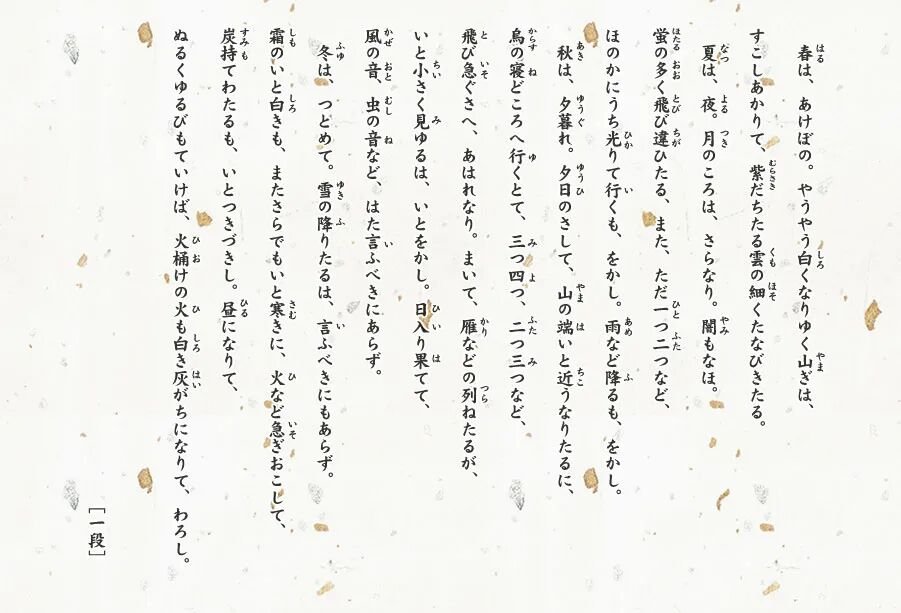
By today’s standards, it is just a diary. It was full of trivial things, such as “summer nights are the best”, “what are the annoying things”, and “the color of the clothes this person is wearing today is really nice”.
That’s all.
A thousand years later, the diary has become one of the greatest works of Japanese literature. Through those trivial words, you can clearly see a real person who lived a thousand years ago.
What she likes, what she hates, what makes her feel beautiful, what makes her irritated.
The human self is never a fixed entity, but a story that is constantly being told.
The reason why you feel “I am me” is not because your body has not changed, but because you can string together the self of yesterday, the self of ten years ago, and the self of today into a coherent narrative.
Human memory is actually extremely unreliable, as evidenced by too much evidence and research.
The diary provides an anchor. It is the testimony you left at that moment and will not drift with subsequent memory reconstruction.
Moreover, the human brain, like large models, actually has something very interesting called compression algorithm.
Henri Bergson, a French philosopher, won the Nobel Prize for Literature in 1927. He was a very interesting person.
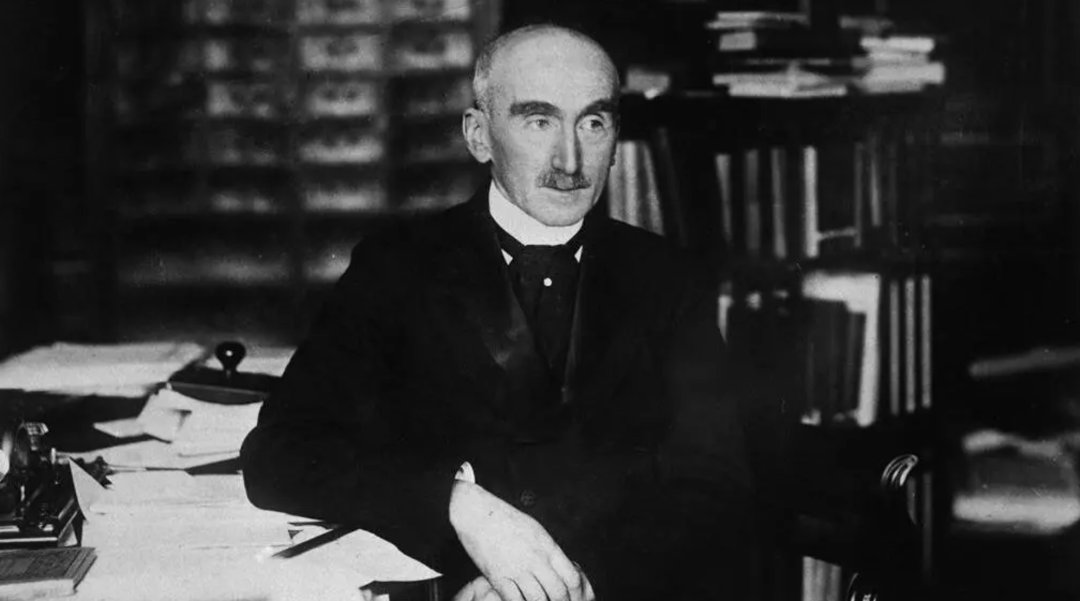
He distinguished two kinds of time, one is called clock time (temps), which passes evenly, at the same speed, and without distinction; the other is duration (durée), which is the subjective time with differences in concentration that we really live in.
As we grow older, we are trapped by inertia, and our days become more and more homogeneous, and our brains start to compress, compressing repetitive days into one line, and discarding weekends that are nothing special. So after a year passed, I looked back and saw that it was empty. Another year had just passed.
When we were young, we will always be remembered, because at that time, we were still young and full of curiosity about the world.
I think a diary can resist this compression very well. When you record every day, you will be forced to pay attention to the difference between today and yesterday, and be forced to find out the unique texture of this day from the homogeneous assembly line.
And these recorded real experiences and insights can help you, in this AI era, find your most authentic anchor as a human being.
So start journaling today.
Tell me what you ate today, who you met, what things touched you, and what thoughts came to your mind.
Tell it to yourself.
Tell it to you ten years from now.
Tell this to a world that will soon be filled with AI.
On this day in 2026, a real person once stood here. He had some trivial worries, some indescribable touches, and some confusions that he might not understand until his death.
But he lived.
And he remembers.
source
author:Digital life kazik
Release time: March 2, 2026 12:00
source:Original post link
Editorial Comment
The irony of a technology influencer advocating for the "old-school" habit of keeping a diary while standing on the streets of Barcelona isn't lost on me. We spend our professional lives optimizing workflows and outsourcing our cognition to large language models, yet we find ourselves increasingly hollowed out by the very efficiency we crave. The core argument presented here—that a diary is a "human anchor" in an age of synthetic noise—is perhaps the most practical piece of "tech" advice I’ve seen this year.
As editors, we see the "internal editor" trap every day. When you sit down to type, you aren't just recording; you are performing. You fix the grammar, you soften the anger, and you turn a raw moment of frustration into a "learning opportunity." By the time the entry is finished, the person who lived the moment has been replaced by a narrator. The suggestion to use voice-to-text as a primary input method is a brilliant psychological hack. It exploits the fact that we speak faster than we can self-censor. It captures the "umms," the stutters, and the raw vernacular that AI—despite its best efforts—still struggles to replicate with genuine soul. These "errors" are the watermarks of a real life.
There is also a profound point here about "time compression." We’ve all felt it: the way a year in your thirties seems to pass in the time it took a single summer to pass when you were ten. This happens because our brains stop recording the "same-old" routines. If your Monday is identical to your Tuesday, your brain hits the "delete" key on the duplicate. Journaling forces the brain to find the "glitch in the matrix"—the seagull flying over a construction site, the specific way a coffee tasted, or a fleeting moment of quiet. It expands our subjective experience of time by adding metadata to our days.
The most nuanced part of this perspective is the boundary set for AI. There is a massive temptation to let a bot "summarize my day" or "clean up my notes." Don't. If you let a machine rewrite your history, you are essentially allowing a third party to forge your memories. The value of a diary isn't in its readability; it’s in its fidelity to the original experience. However, using AI as a mirror—to look back at a month of entries and say, "I noticed you seem anxious every time you mention this specific project"—is a legitimate use of the technology. It turns the AI into a therapist’s assistant rather than a ghostwriter.
Ultimately, we are entering a period where "proof of personhood" will be more than just a digital certificate or a retinal scan. It will be the messy, unoptimized, and deeply private narrative of our own lives. If you don't record your life, the algorithms will eventually tell you who you are based on what you clicked, not what you felt. Keeping a diary is no longer about "dear diary" sentimentality; it is about data sovereignty over your own soul. Start talking to your phone’s memo app tonight. Not for an audience, not for a "brand," but for the version of you that will want to remember what it felt like to be human in 2026.