

Editor’s Brief
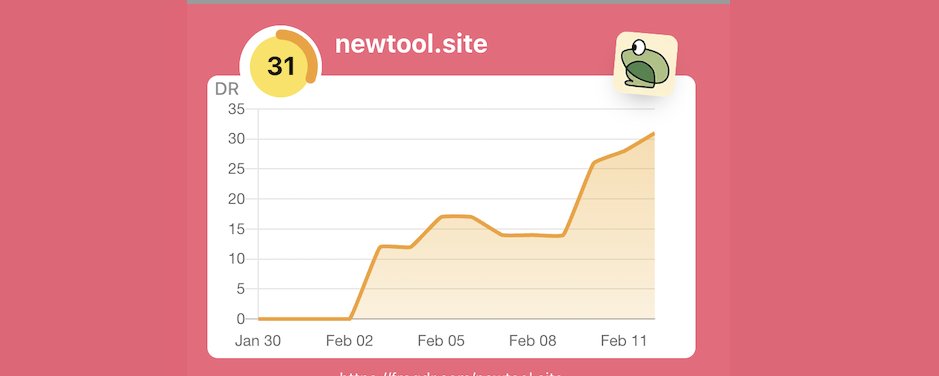
Indie developer Cyan documents a surprisingly methodical approach to domain rating SEO link building, pushing a brand-new site from DR 0 to DR 30+ in ten days without paid link services. Rather than chasing the usual tool-directory submission queues, Cyan’s strategy pivots toward overlooked high-authority sources — business directories and online yellow pages — that most tech founders ignore entirely. The breakdown offers a tiered execution framework that any solo developer can adapt, making it one of the more honest and granular accounts of early-stage authority building published on the indie web this year. — Michael Sun, Senior Editor
- Domain Rating is an Ahrefs-proprietary metric, not a direct Google ranking factor, but it remains one of the most useful proxies for a new site’s perceived authority and indexation speed.
- The fastest DR gains come from “Tier 1” platforms like FindlyTools (DR 75) that offer instant listing with dofollow links — no review queue, no waiting period.
- Business directories and online yellow pages are the overlooked power move: high DR (often 80+), long domain histories, minimal review friction, and genuine dofollow links that most tech builders never pursue.
- Not all backlinks move the needle equally — distinguishing dofollow from nofollow links before investing submission time is essential to avoid wasted effort.
- The optimal sequencing is Tier 1 (instant-approval, high-DR tool sites) first, Tier 2 (business directories and small search engines) second, and Tier 3 (long-queue navigation sites) last as a long-term compounding play.
- Studying the backlink profiles of fast-growing peers — rather than guessing — reveals which specific sources are delivering real authority transfer.
- DR 30 is a launchpad, not a destination; sustained growth beyond that threshold requires editorial backlinks and organic citations that directories alone cannot provide.
NovVista Editorial
In the indie developer community, Domain Rating has become the unofficial scoreboard for launch readiness. A site sitting at DR 0 is functionally invisible to search engines — pages index slowly, keyword competition is out of reach, and even the best content struggles to surface. Cyan’s ten-day sprint from zero to 30 addresses this cold-start problem with a level of tactical clarity that most “how I grew my DR” posts conspicuously lack.
The most valuable insight here is not the list of submission targets — those will shift as platforms change their policies — but the analytical method behind target selection. Cyan did not simply mass-submit to every directory with a submission form. They reverse-engineered the backlink profiles of peers like Robertg, filtered for dofollow links, and calculated the effort-to-reward ratio of each source category. That disciplined approach to domain rating SEO link building is what separates strategic authority acquisition from the kind of scattershot link spam that Google’s algorithms have gotten increasingly effective at discounting.
The pivot toward business directories deserves particular attention. These platforms — the “dinosaurs” of the internet, as Cyan aptly frames them — carry enormous accumulated authority precisely because they have been around for decades and serve a genuine information-retrieval function. Most developers overlook them because they do not feel like “tech” sites. But listing a SaaS tool as a service provider on a DR-80 business directory is entirely legitimate, and the dofollow links these platforms provide transfer meaningful authority. It is a reminder that SEO advantage often lives in the gaps between what everyone knows and what everyone actually does.
That said, the editorial team wants to flag the sustainability question that Cyan acknowledges but perhaps underweights. Getting to DR 30 through directory submissions is a tractable, repeatable process. Getting from 30 to 50 is a fundamentally different game. At that tier, the sites earning authority growth are the ones generating editorial mentions, organic citations from blog posts, and genuine word-of-mouth links — none of which a submission form can produce. We have tracked dozens of indie projects that plateau at the DR 25-35 range because their entire backlink profile consists of directory listings with no editorial layer on top.
For developers reading this as a playbook, the correct framing is: use Cyan’s tiered approach to escape the zero-authority basement as fast as possible, then immediately shift investment toward content that earns links organically. A technical blog, a well-documented open-source component, or a genuinely useful free tool will generate the kind of backlinks that directories cannot replicate. The ten-day sprint gets you to the starting line; the marathon that follows requires a different set of muscles entirely.
One additional note on risk management: directory-heavy backlink profiles can look unnatural to algorithmic reviewers if they constitute 100% of a site’s link graph. Diversifying link types early — even with a handful of guest posts or community mentions — helps establish a more organic-looking profile that ages well as the site matures. — Michael Sun, Senior Editor
Editor’s Brief
Indie developer Cyan shares a tactical roadmap for accelerating Domain Rating (DR) growth, detailing how they moved NewTool.site from a zero-authority baseline to DR 30+ in just ten days. The strategy moves away from paid services and focuses on a tiered approach to backlink acquisition, leveraging high-authority directories, business listings, and niche search engines to bypass traditional approval bottlenecks.
Key Takeaways
- Quality over Quantity:** Focus on high-DR "powerhouse" sites early on to maximize authority transfer with fewer links.
- Tier 1 (Instant Impact):** Prioritize platforms like FindlyTools (DR 75) that offer instant listing and "dofollow" links without lengthy manual reviews.
- The Directory "Hack":** Utilize business directories and online Yellow Pages—sites with long histories and high DR—by listing a web tool as a service provider.
- Tiered Execution:** Sequence submissions starting with instant-approval sites, followed by manual-entry business directories, and finally long-queue navigation sites.
- Metric Awareness:** Distinguish between "dofollow" and "nofollow" links to ensure the effort actually moves the needle on third-party authority scores.
Introduction
The following content is compiled by NOVSITA in combination with X/social media public content and is for reading and research reference only.
focus
- When NewTool.site was first launched on February 2, the Domain Rating (DR) was still 0, and there was no traffic…
- I looked at several well-known navigation sites and asked Fox @indie_maker_fox and @Justin1024go how…
Remark
For parts involving rules, benefits or judgments, please refer to Cyan’s original expression and the latest official information.
Editorial comments
This article “X Import: Cyan – How did I increase DR from 0 to 30+ in 10 days? 》From X Social Platform, written by Cyan. Judging from the completeness of the content, the density of key information given in the original text is relatively high, especially in the core conclusions and action suggestions, which are highly implementable. When NewTool.site was first launched on February 2, the Domain Rating (DR) was still 0 and there was no traffic. Everything is ready, all we need is external links 😅 I observed several well-known navigation sites and asked Fox @indie_maker_fox and @Justin1024go what they should do to improve DR more efficiently. The answers almost all pointed to the same thing: send external links. Since we are sending external links, how can we increase D more efficiently… For readers, its most direct value is not “knowing a new point of view”, but being able to quickly see the conditions, boundaries and potential costs behind the point of view. If this content is broken down into verifiable judgments, it would at least include the following aspects: When NewTool.site was first launched on February 2, the Domain Rating (DR) was still 0, and there was no traffic…; I observed several well-known navigation sites, and also asked Fox @indie_maker_fox and @Justin1024go what to do… Among these judgments, the conclusion part is often the easiest to disseminate, but what really determines the practicality is whether the premise assumptions are established, whether the sample is sufficient, and whether the time window matches. We recommend that readers, when quoting this type of information, give priority to checking the data source, release time and whether there are differences in platform environments, to avoid mistaking “scenario-based experience” for “universal rules.” From an industry impact perspective, this type of content usually has a short-term guiding effect on product strategy, operational rhythm, and resource investment, especially in topics such as AI, development tools, growth, and commercialization. From an editorial perspective, we pay more attention to “whether it can withstand subsequent fact testing”: first, whether the results can be reproduced, second, whether the method can be transferred, and third, whether the cost is affordable. The source is x.com, and readers are advised to use it as one of the inputs for decision-making, not the only basis. Finally, I would like to give a practical suggestion: If you are ready to take action based on this, you can first conduct a small-scale verification, and then gradually expand investment based on feedback; if the original article involves revenue, policy, compliance or platform rules, please refer to the latest official announcement and retain the rollback plan. The significance of reprinting is to improve the efficiency of information circulation, but the real value of content is formed in secondary judgment and localization practice. Based on this principle, the editorial comments accompanying this article will continue to emphasize verifiability, boundary awareness, and risk control to help you turn “visible information” into “implementable cognition.”
When NewTool.site was first launched on February 2, the Domain Rating (DR) was still 0 and there was no traffic. Everything is ready, all we need is external links 😅
I observed several well-known navigation sites and asked Fox @indie_maker_fox and @Justin1024go what they should do to improve DR more efficiently. The answers I got almost all pointed to the same thing: sending external links.
Since we are sending external links, how can we increase DR more efficiently?
The answer is of course not to find someone to post it on your behalf 😅, otherwise I wouldn’t have to write this post.
Robertg @nxgntools is probably the fastest of the developers I follow. He reached 50 DR in 8 weeks without being promoted.
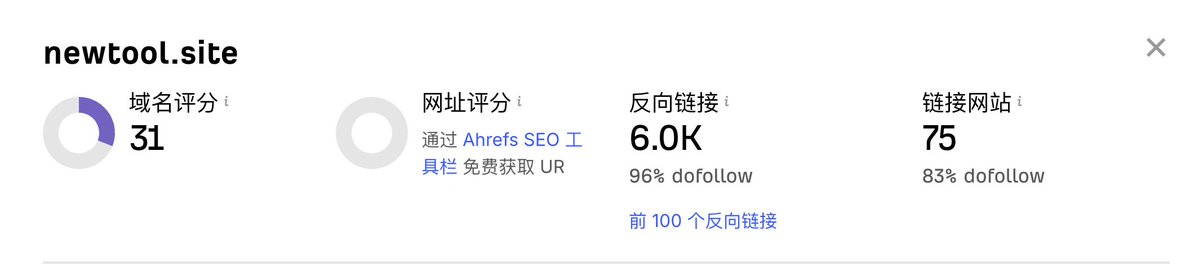
It’s really fast, and judging from the backlink checker, Robertg is indeed not looking for a dropshipping agent – so far, there are only 139 linked websites:

And my NewTool.site has reached 75:
Robertg summed up his experience in his blog:
- Make the website ready first
- Quality over quantity: Give priority to websites with high DR at the beginning, because they have higher weight and can make a huge difference.
- Keep sending external links
In addition, Robertg also specifically listed 14 external links that he believes can help developers quickly increase DR, including Product Hunt, Fazier, Dang, TwelveTools, Turbo0, FindlyTools, Uneed, Wired Business, Tiny Launch, etc.
There are indeed some DR tools, such as FindlyTools – I think this is a website that every developer pursuing DR should invest in first: 75DR, no need for review, immediate listing, and dofollow. Others require a few days to review, such as TwelveTools, Turbo0, etc., which are generally fast.
Looks inspiring, right?
But if you take a closer look, you will find that there are nofollows in these external links, and some of them have to wait a long time to launch after submission. “There must be an echo” is definitely true, but when it happens, I will have changed from “never forget” to “miss it”…
There must be a way to increase DR quickly and cost-effectively.
I carefully browsed several external link ranking websites, and was pleasantly surprised to find some “non-mainstream” paths: business directories/online yellow pages.
These websites were originally intended to be local or peer information aggregation stations for people to “find companies/services”. But we can directly post our website as a company and get high-quality external links!
For example👇the following two stops:
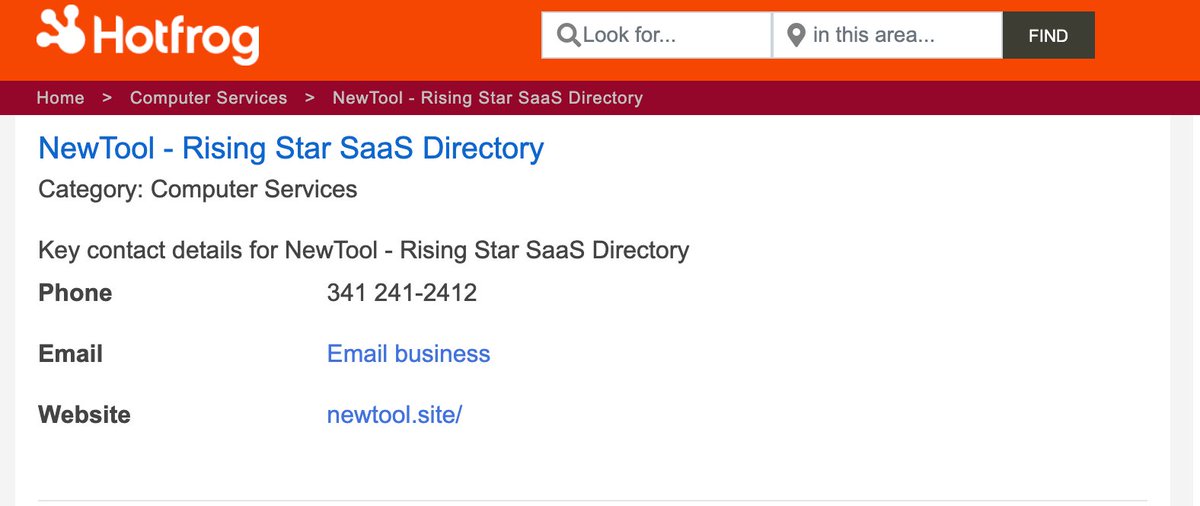
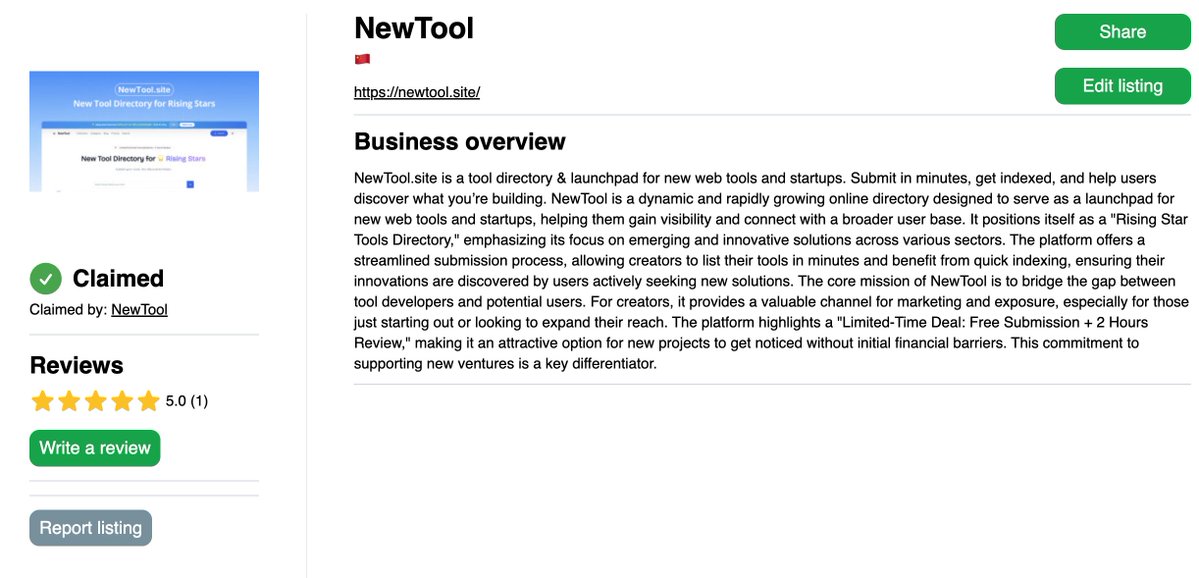
And it’s a genuine dofollow!

This type of business directory/online yellow pages website, apart from being a little troublesome to fill in, is almost always unaudited. In terms of efficiency, it can completely rival those previous professional navigation sites that “pass in seconds”. More importantly, they generally take a long time to go online, have high DR (around 80), and the delivery effect is more obvious!
In addition, there is a type of “small-scale search engine/similar discovery” website that cannot be missed. For example👇the following two stops:
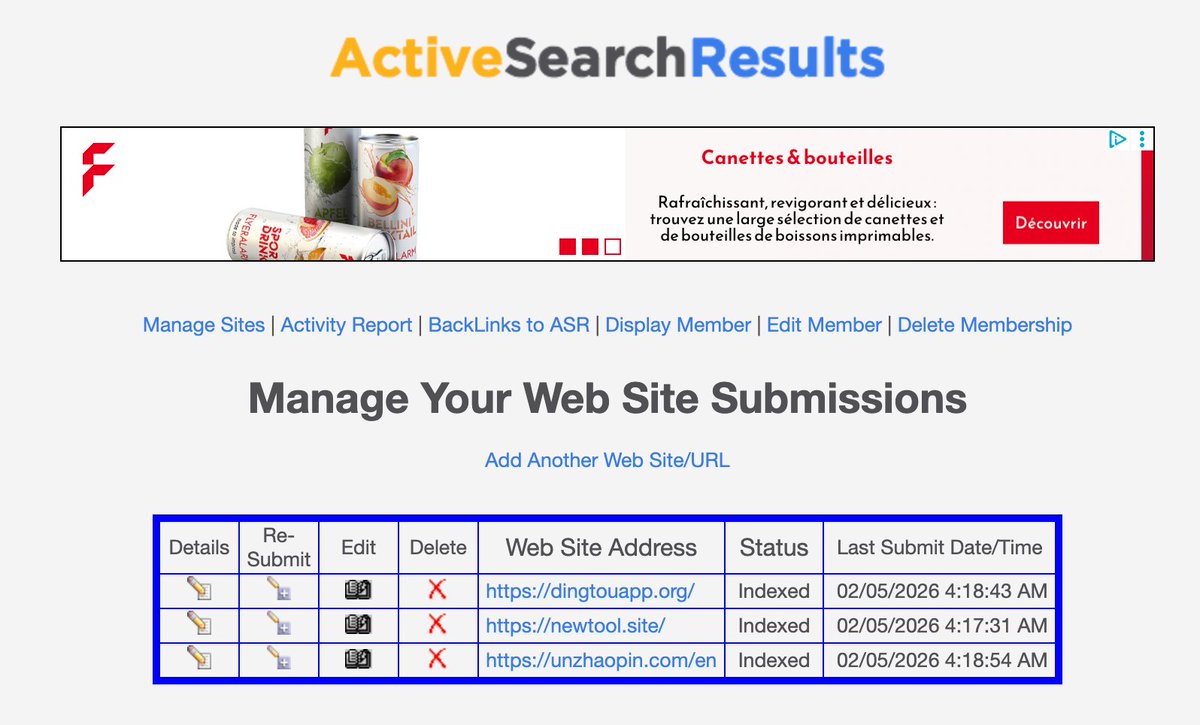
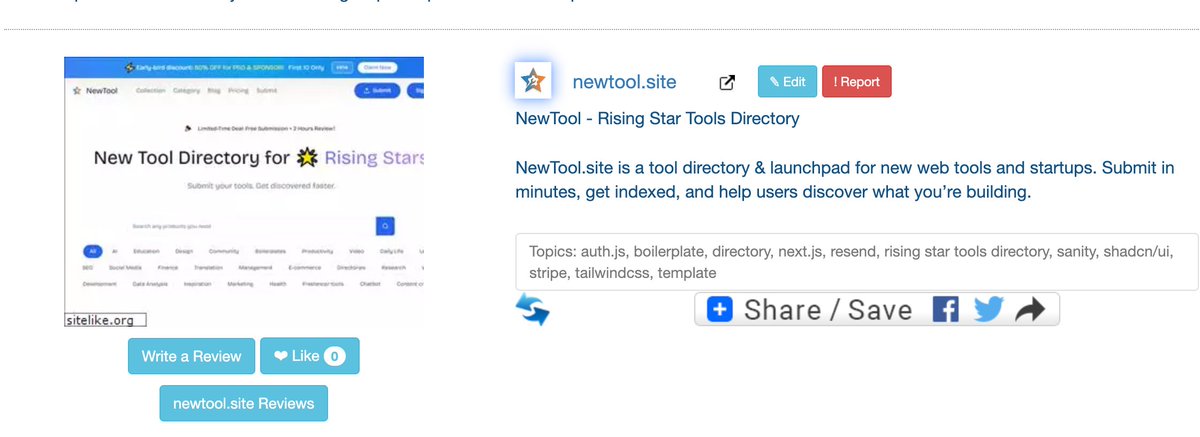
Although the DR of this type of site is relatively low (around 70), it is better at submitting and passing in seconds. What more bikes do you want?
In summary, we analyzed the “first-line external links” that can “submit in seconds and pass in seconds”, including FindlyTools, TwelveTools, Turbo0, etc. Second-tier external links “Business Directory/Online Yellow Pages/Small Engine Category”. Of course, there are also ordinary “third-line external links” that require a long queue time to launch after submission.
Therefore, our DR strategy of “more speed, more savings” should be as follows:
- First send “first-line external links”: This can not only bring high DR delivery to the new site, but also effectively increase the new site’s exposure.
- Next, immediately aim for the “second-tier external links”: although it is a little more troublesome to fill in, there is basically no review, and the site has a long history. DR tends to be higher.
- After completing the first two steps, send out “third-line external links” on a large scale: those that need to queue for a long time to launch, and then think to yourself – “if you keep thinking about them, there will be responses” 😂 After all, they will be the main force in increasing DR in the future.
Of course, let’s look at it from another angle: If you don’t pursue speed so much, you can actually make “third-line external links” a priority submission category in advance, focusing on a long-term flow.
If you need it, I can compile a list of these three categories later for your convenience.
Direct comparison submission.
Hope this article is helpful to you! Everyone is welcome to submit any tool of their own at NewTool.site for free, and there are currently 7 opportunities for a 50% half-price discount on plans like Pro!
Finally, I wish you all a happy new year and may your new site DR soar to the sky!
source
author:Cyan
Release time: February 15, 2026 05:04
source:Original post link
Related Reading
- Content Strategy for Technical Blogs — Once your DR clears the 30 threshold, organic link acquisition through quality content becomes the primary growth lever; this guide covers the editorial frameworks that earn editorial backlinks.
- Why Every Developer Should Understand DNS — Domain authority starts with proper DNS configuration; understanding records, propagation, and provider choices prevents the kind of technical debt that undermines SEO foundations.
- The Privacy-First Analytics Stack — After building domain authority, you need reliable traffic measurement that does not depend on Google Analytics; this piece covers Plausible, Umami, and privacy-compliant alternatives.
Editorial Comment
In the world of indie hacking and SEO, Domain Rating (DR) is often treated as the ultimate scoreboard. While it is technically a proprietary metric from Ahrefs rather than a direct Google ranking factor, it serves as a vital proxy for a site's perceived "weight" in the digital ecosystem. Cyan’s breakdown of how they spiked this metric from 0 to 30 in less than a fortnight is a masterclass in tactical efficiency, but it also warrants a closer look at the trade-offs between speed and long-term site health.
The core of Cyan’s success lies in identifying "frictionless authority." Most developers get bogged down in the "Tier 3" sites—the standard tool directories that have three-month backlogs or require expensive "fast-track" fees. By shifting focus to "Tier 1" and "Tier 2" sources, Cyan essentially bypassed the gatekeepers. The most clever part of this strategy is the pivot toward business directories and online Yellow Pages. These are the "dinosaurs" of the internet; they have massive accumulated authority and high trust scores, yet they are often overlooked by tech developers because they don't feel like "tech" sites. Listing a SaaS or a web tool as a "service business" on these platforms is a legitimate way to capture high-DR dofollow links that the competition is ignoring.
However, as a senior editor looking at the broader landscape, I have to inject a note of caution regarding the "DR for the sake of DR" mindset. Rapidly inflating a metric in ten days is an excellent way to gain early-stage momentum, but it is not a substitute for a content strategy. High DR can help your pages index faster and compete for low-competition keywords, but if the underlying site lacks depth, that DR 30+ score becomes a hollow shell. We’ve seen many "ghost ships" in the indie space—sites with high authority scores but zero organic traffic because their backlink profile is built entirely on directories rather than editorial mentions or organic citations.
Cyan’s approach is particularly effective for the "cold start" problem. When you launch a new tool, you are invisible. You need that initial "thump" of authority just to get Google to take you seriously. The tiered strategy—starting with instant-approval sites like FindlyTools and then moving into the more labor-intensive business directories—is a logical, high-ROI use of a founder's time. It’s significantly more productive than refreshing a dashboard waiting for a Product Hunt launch to provide a temporary spike.
For developers looking to replicate this, the takeaway shouldn't just be the list of URLs. It should be the methodology of "backlink auditing." Cyan didn't just spam links; they analyzed the profiles of successful peers like Robertg, identified which links were actually dofollow, and calculated the effort-to-reward ratio. That analytical layer is what separates a strategic growth hacker from a spammer.
Ultimately, this 10-day sprint should be viewed as the foundation, not the finished house. Once you’ve secured that DR 30 floor, the "low-hanging fruit" of directories is mostly picked. The next phase of growth—moving from 30 to 50 and beyond—usually requires the much harder work of building a product that people link to because it’s useful, not just because a submission form was available. Use Cyan’s roadmap to get out of the "zero-authority" basement, but don't forget to build something worth ranking once you get to the main floor.