

Intro
The buzz around Lóngxiā (OpenClaw) is spreading from the geek community to the entire industry, even causing Mac mini shortages and a surge in cloud vendor sales. This isn’t just a tech party—it feels like a
过了一个周末,龙虾的热度不仅没有任何衰减,还进入了魔幻现实主义阶段。
更魔幻的是,龙虾在中国的热度,甚至已经超过了美国。
云端主机的龙虾、电脑本地的龙虾、手机系统的龙虾,甚至一些严格来说都不是龙虾的 Cowork 类产品,也开始纷纷往自己头上扣龙虾的帽子。
云厂商原地飞升,火山、阿里、腾讯几家的 coding plan 销量暴增。
Mac mini 卖到脱销,现货价格翻倍。
周鸿祎、傅盛这些互联网 1.0 时代的人物,也纷纷下场养龙虾。
一夜之间,所有人都在谈龙虾,所有人都在装龙虾,所有人都怕自己没有龙虾。
朱啸虎发出感慨。他说:
“龙虾”确实是一个很明显的起点,相当于AI时代的OS操作系统基本上确定了。
这句话说的有点笃定,但不是没有道理。
龙虾像一个“统一接入层”。
上面接模型、下面接终端、旁边接企业 IM 和工作流,所以它看起来像工具,实际更像 AI 时代的操作系统。
很多人在安装完之后,立即灵魂提问:
"我装了龙虾能干嘛?"
这个问题很有意思。所有人都在装龙虾,但没人知道装完之后该干什么。
这点就更像操作系统了,就像你打开电脑装好了 Wind
ows,好像什么都能干,但好像确实不知道能干嘛。
所以后来微软才把 IE 绑定在 Windows 里面,把 Office 绑定在了 Windows 里面。
今天的龙虾,也正处在新系统这个阶段。
短期的泡沫还是长期的红利?
龙虾到底是短期热潮,还是长期机会?
一个爆火的事物往往是短期的,但它的影响可以很长期。
政府在龙虾这件事情的反应速度快得惊人。
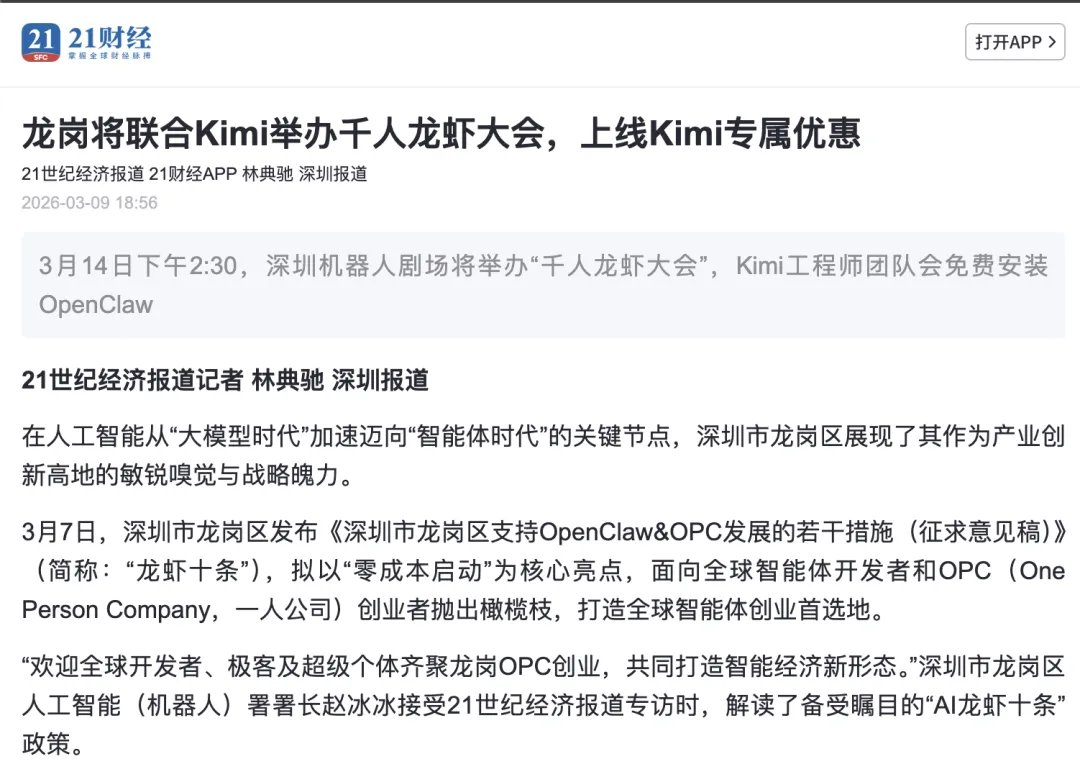
深圳龙岗率先推出龙虾10条,无锡跟进发布龙虾12条。这背后是政府在大力推动 OPC 政策的落地。
深圳龙岗甚至宣布将联合 Kimi 举办千人龙虾大会,官方下场,带动行业发展。
OPC 政策,一人公司,对国对民都是好事。
以前鼓励全民创业,要搭团队要拿投资,门槛不低。
而 OPC 一个工位+一点补贴+无数的AIAgent,就真正做到了一人
They formed the team.
The government’s swift response is an attitude that gives people a sense that it’s worth a long‑term investment.
There’s also an old article that’s been circulating in various groups. Most people only read the headline,
tion>
最荒诞的一幕是,有做安装服务的师傅说:
最近装了很多龙虾,需求挺旺盛的,虽然我自己也不知道装了之后能干嘛。
这句话太绝了。
装了之后能干嘛?这还真TM是个灵魂提问。
安装师傅能帮你安装龙虾,但不能帮你想清楚龙虾能干嘛。
以前用户安装一个新产品的动机是「我知道能干啥!」,现在是不管三七二十一,先装了再说,安装完了再问「我到底能用这玩意儿干啥?」
我们给用户提供了 ListenHub 的龙虾 Skills,用户却来问我们 ListenHub 有没有安装龙虾的服务。。
真是…倒反天罡。
你可以不会用,但你不能没有。
你可以暂时不知道能干嘛,但你必须先装上。
装没装,已经不只是一个工具问题,而是一种姿态问题,一种是否跟上这个时代的身份问题。
养龙虾真的能赚到钱吗?
聊完情绪价值,再让我们看看更关键的商业价值。
龙虾这次不只是热闹,是真的开始有人赚钱了。
首先赚到钱的,是模型公司。
前几天朋友哥飞发了小红书提到一个重要的数据:2026年1月,Kimi 在 Stripe 的订单数激增8280%,2月又增长了123.8%。在2024到2025年2
4个月里,Kimi 的订单都没进入 Stripe 排行榜前100名,但1月飙升到第22名,2月升到第9名。
进入 2026 年,Kimi 近20天的累计收入已超过2025年全年,从此没有人再怀疑 Kimi 的商业化潜力,公司估值也突破了百亿美金门槛。
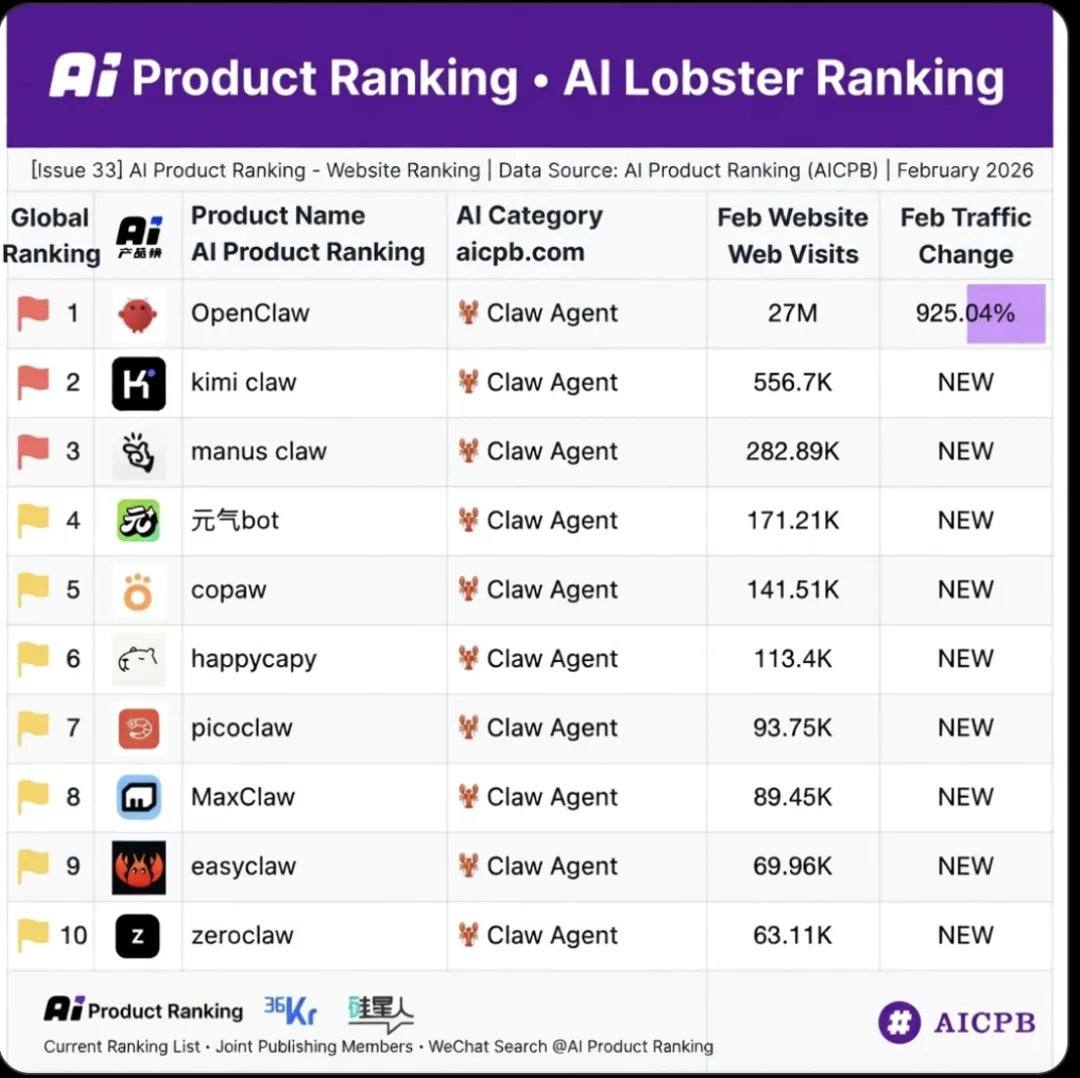
但这波赚钱的,不止是模型公司。
我们仔细看看这张图,就能发现,不仅是 Kimi 和 MiniMax 这样的模型公司在这波赚到了钱。
被 Meta 收购的 Manus、阿里的 copaw 、创业公司的 happycapy,都吃到了龙虾的流量红利赚到了钱。
最让人意外的事情是大厂的态度的巨大转变。
飞书,整个团队都对龙虾特别上头,飞书以前的机器人接入流程简直是反人类,但是官方先是做了一套插件减少了膜材,今天还要激进地给每个人都直接配一个龙虾。
企业微信,也很快宣布支持 OpenClaw 接入。<
Supporting OpenClaw also means supporting all the “lobsters.”
Yesterday, Da Congming even wrote a Kimi Claw integration guide for Enterprise WeChat:
This is a
There’s nothing more compelling than a user who takes the initiative to buy.
For the common good, humanity can eliminate every barrier.
All the bustle in the world is driven by profit, and all the hustle is propelled by the pursuit of gain.
Every person who makes money off lobsters has become the unseen force behind the lobster craze.
Behind the frenzy lies a calm analysis.
The lobster craze is truly wild, but after a careful look I’m not convinced it’s all bad.
First, the world has indeed begun to reconnect.
This time everyone isn’t acting in isolation.
In the past you’d push a dumpling, I’d push a thousand questions, he’d push Kimi, and each of us was building our own walled garden.
But this time it’s different: WeChat, QQ, Weibo all connect to Kimi, and Kimi in turn connects to OpenClaw.
More importantly, the enterprise‑service walls that each platform had built are now being dismantled.
Feishu, DingTalk, QQ, WeChat Work—how many years and how much money did these platforms spend to build their moat? Now they’re opening it up.
It feels like the long‑awaited vibe of Internet 1.0: first connect, then talk.
Second, lobsters really do make money, and users are willing to pay.
Cloud vendors’ sales have exploded, AI model sales have surged, hardware suppliers are clearing inventory, and even installation technicians can earn over ten thousand a month.
It’s not a race to give away free stuff or subsidize with eggs; it’s real, tangible profit.
Users have a strong willingness to pay, and enterprises share that same appetite.
While they still don’t know exactly what it will bring…
么价值的时候,就愿意把钱包打开了。
中国人是有钱了,中国人的心态也是有钱人的心态了。
大家对中国人不爱为软件花钱的刻板印象要彻底改变一下了。
第三,不知道干嘛,说明生态还是空的。
很多人看到“大家装了龙虾却不知道能干嘛”,第一反应是:泡沫。
但我在看来,这恰恰说明 Agent OS 的上层生态还是一片空白。
如果一个系统已经成熟到所有人都知道该怎么用,那机会反而没那么多了。
正因为现在大家还在问“能干啥”,才说明真正的应用层、场景层、服务层都还没有被填满。
空,并不是坏事,空,就意味着机会。
谁能在这个空的生态里找到自己的位置,创造自己的价值,谁就能赚到钱。
还记得我在文章里写的那句话吗:
「Agent 是新时代的人口红利」
现在再看这句话,会更有感觉。
全国这么多装完龙虾,嗷嗷待哺,基本已经把“人口红利”四个字写在脸上了。
狂热之后,我们该干嘛?
一个东西的普及,必然伴随着狂热、误解、泡沫、混乱。
这是人类接受一项新事物的标准流程,不丢人,也很正常。
重要的不是这个过程够不够优雅, 重要的是:它已经普及开了。
龙虾已经成了一个新
The operating system. The world has reconnected.
Lobsters really can make money, proving that this path is viable.
Although the ecosystem is currently empty, it gives us a chance to build.
The important thing remains:
Think about what we can do here, or how we can help Agent.
It’s not about following the trend of installing lobsters; it’s about finding your place on this new operating system.
It’s not about chasing hot topics; it’s about creating value.
It’s not about doing what everyone else does; it’s about doing what only you can do.
The people who will truly reap the benefits in the future may not be the first to install lobsters,
but those who answer this question first:
After installing lobsters, what can you actually do?
Source
Author: Orange AI
Published: March 10, 2026 13:09
Source: Original post link
Editor’s Commentary
These past few days, the tech scene has taken on a truly bizarre vibe. People have stopped talking about model parameters and stopped binge‑watching Sora videos; instead, the entire feed is saturated with the phrase “养龙虾” (“raising lobsters”). If you haven’t yet realized that this “lobster” refers to OpenClaw, you’re probably already a step behind the front row of this AI social wave. How do you describe this level of hype? It has moved beyond a purely technical discussion and morphed into a surrealist movement that blends hardware buying frenzies, side‑gig celebrations, and local policy competitions. The most obvious barometer isn’t the number of GitHub stars but the resale price. Mac minis are selling out and even commanding a premium on the secondary market, while cloud providers’ compute packages are snapped up in a flash. This tangible, cash‑based investment shows that the craze isn’t just a verbal skirmish. From Zhu Xiaohu to Zhou Hongyi, veteran internet leaders have all jumped in, essentially betting on a single premise: that a system like OpenClaw—capable of tying together models, endpoints, and workflows—could very well become the “operating system” of the AI era. We used to think AI was far from everyday life because a model is just a clever brain; OpenClaw gives it hands and feet.
But as an editor, I feel compelled to sprinkle a little cold water on this frenzy. In the current “lobster fever,” at least half of it is pure FOMO—fear of missing out. The original article mentions a particularly interesting detail: many people spend hundreds or even thousands of yuan hiring someone to install OpenClaw, only to ask, “What can I actually do with it?” It’s a direct echo of the computer‑building craze of the early 2000s. Back then, everyone thought buying a computer would change their destiny; now, people think installing OpenClaw will let them “stand alone in an army.” This kind of tool worship often masks a lack of logic. If you don’t know where your business flow lies, installing a hundred lobsters is just a pricey decoration inside your computer.
However, in this wave of enthusiasm, there is one variable that is…