

Editor’s Brief
This article is best used as an operational reference: it surfaces a clear claim, a usable method pattern, and practical constraints that should be tested before scaling.
Key Takeaways
- IntroductionThe following content is compiled by VIPSTAR in combination with X/social media public content and is for reading and research reference only.
- focusJenny Wen is Claude Design Lead at Anthropic and currently leads Claude Co-work’s…This episode of Lenny's Podcast talks about five major things: why the traditional design process has come to an end, what it is like to design in an AI laboratory,…
- RemarkFor parts involving rules, benefits or judgments, please refer to Baoyu’s original expression and the latest official information.
- Editorial commentsThis article "X Import: Baoyu – The design process is dead: Jenny Wen, head of Anthropic design, talks about design changes in the AI era" comes from the X social platform and is written by Baoyu.
Introduction
The following content is compiled by VIPSTAR in combination with X/social media public content and is for reading and research reference only.
focus
- Jenny Wen is Claude Design Lead at Anthropic and currently leads Claude Co-work’s…
- This episode of Lenny’s Podcast talks about five major things: why the traditional design process has come to an end, what it is like to design in an AI laboratory,…
Remark
For parts involving rules, benefits or judgments, please refer to Baoyu’s original expression and the latest official information.
Editorial comments
This article “X Import: Baoyu – The design process is dead: Jenny Wen, head of Anthropic design, talks about design changes in the AI era” comes from the X social platform and is written by Baoyu. Judging from the completeness of the content, the density of key information given in the original text is relatively high, especially in the core conclusions and action suggestions, which are highly implementable. Jenny Wen is the Claude Design Lead at Anthropic and currently leads the design efforts at Claude Co-work. Before joining Anthropic, she was the design director at Figma, where she led the entire process from concept to launch for FigJam and Slides. Earlier I was designing at Dropbox, Square and Shopify. This episode of Lenny’s Podc…. For readers, its most direct value is not “knowing a new point of view”, but being able to quickly see the conditions, boundaries and potential costs behind the point of view. If this content is broken down into verifiable judgments, it at least includes the following levels: Jenny Wen is the head of Claude design at Anthropic, and currently leads Claude Co-work…; This episode of Lenny’s Podcast talked about five major things: why the traditional design process has come to an end, what it is like to design in an AI laboratory,… Among these judgments, the conclusion part is often the easiest to disseminate, but what really determines the practicality is whether the premise assumptions are established, whether the sample is sufficient, and whether the time window matches. We recommend that readers, when quoting this type of information, give priority to checking the data source, release time and whether there are differences in platform environments, to avoid mistaking “scenario-based experience” for “universal rules.” From an industry impact perspective, this type of content usually has a short-term guiding effect on product strategy, operational rhythm, and resource investment, especially in topics such as AI, development tools, growth, and commercialization. From an editorial perspective, we pay more attention to “whether it can withstand subsequent fact testing”: first, whether the results can be reproduced, second, whether the method can be transferred, and third, whether the cost is affordable. The source is x.com, and readers are advised to use it as one of the inputs for decision-making, not the only basis. Finally, I would like to give a practical suggestion: If you are ready to take action based on this, you can first conduct a small-scale verification, and then gradually expand investment based on feedback; if the original article involves revenue, policy, compliance or platform rules, please refer to the latest official announcement and retain the rollback plan. The significance of reprinting is to improve the efficiency of information circulation, but the real value of content is formed in secondary judgment and localization practice. Based on this principle, the editorial comments accompanying this article will continue to emphasize verifiability, boundary awareness, and risk control to help you turn “visible information” into “implementable cognition.”
Jenny Wen is the Claude Design Lead at Anthropic and currently leads the design efforts at Claude Co-work. Before joining Anthropic, she was the design director at Figma, where she led the entire process from concept to launch for FigJam and Slides. Earlier I was designing at Dropbox, Square and Shopify.
In this episode of Lenny’s Podcast, we talked about five major things: why the traditional design process has come to an end, what it is like to design in an AI laboratory, whether AI will replace human taste and judgment, how co-work is made, and what kind of designers to hire now.
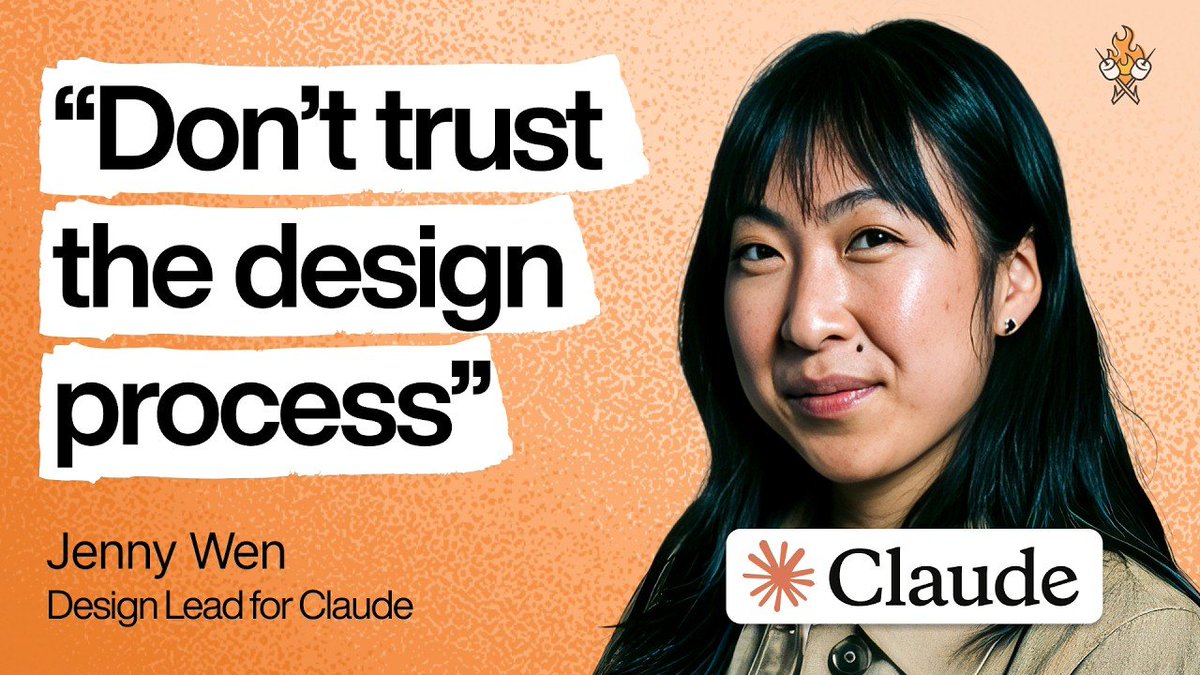
Source: Lenny’s Podcast, March 1, 2026
Original video:https://www.youtube.com/watch?v=eh8bcBIAAFo
Quick overview
- The “death” of the traditional design process: the classic process of divergence – convergence – divergence – convergence is forced by the speed of engineering. The time spent by designers on design drafts is compressed from 60-70% to 30-40%. The extra time is used for pairing with engineers or even writing code themselves.
- Vision planning has been significantly shortened: the time window has shrunk from 2-5 years to 3-6 months, and the format has changed from a beautiful presentation to a prototype that can point the way.
- Human value lies in decision-making and responsibility: AI will get better at taste and judgment, but the hardest part of building software is not the building itself
- The true story of Co-work: “10 days” development is actually the last sprint after a long period of exploration. Brand trust does not depend on perfect releases, but on quick responses to feedback.
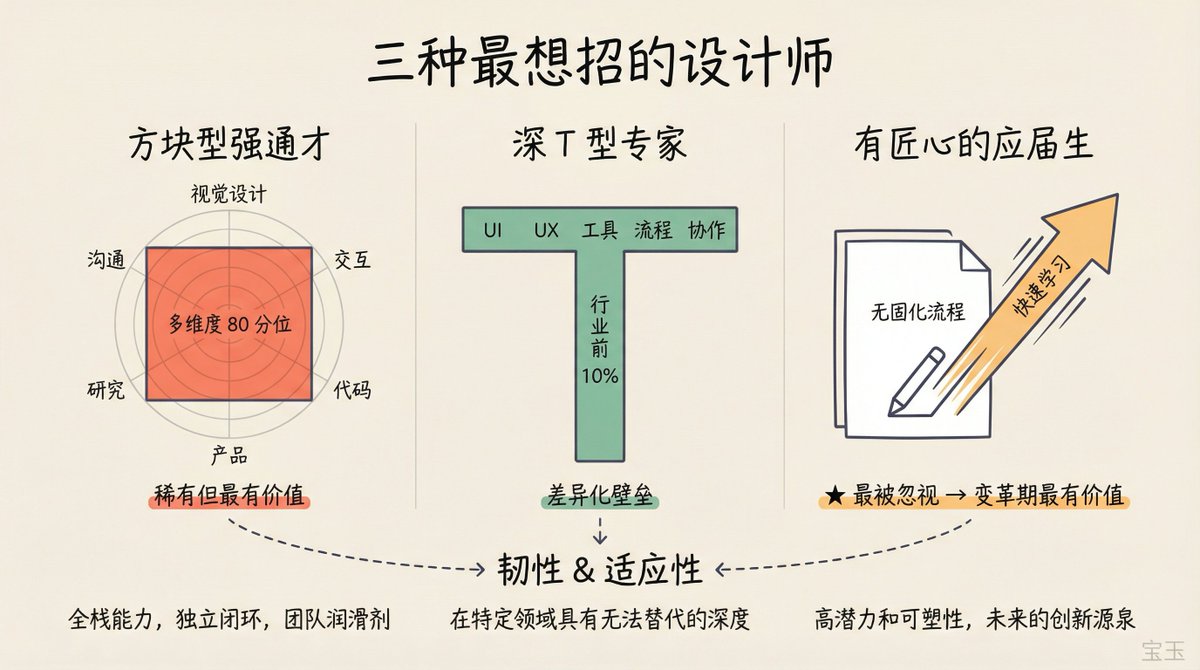
- The three types of designers most worth recruiting: square-shaped strong generalists, deep T-shaped experts, and ingenious fresh graduates. The third type is the most ignored but the most valuable in the period of change.
The design process is dead, not by itself, but by the speed of engineering.
Lenny’s first question: How has the design process changed in the AI era?
Jenny’s answer is straightforward:
The design process that designers were taught, that we once followed like a bible, is basically dead now.
(“This design process that designers have been taught—we sort of treat it as gospel—that’s basically dead.”)
She was referring to the classic double diamond model, which involves research and divergence first, then convergence, then divergence, and then convergence.
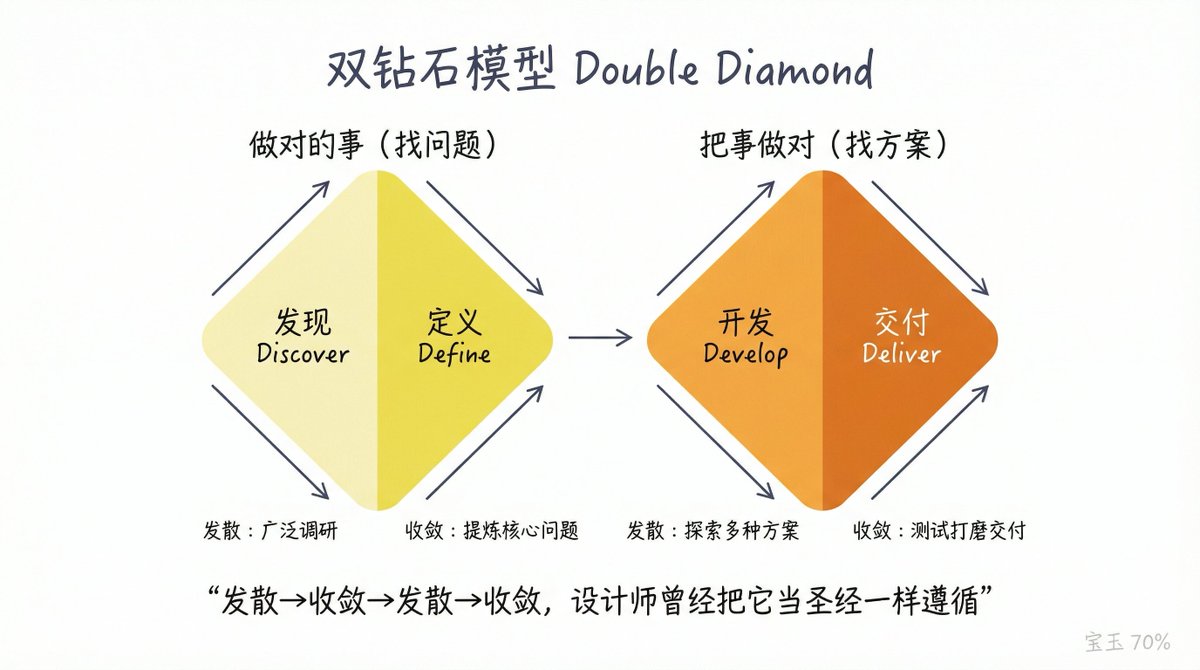
This methodology was already a bit unsustainable before AI, but when engineers can open 7 Claude instances at the same time to build functions, designers can no longer work with the old process.
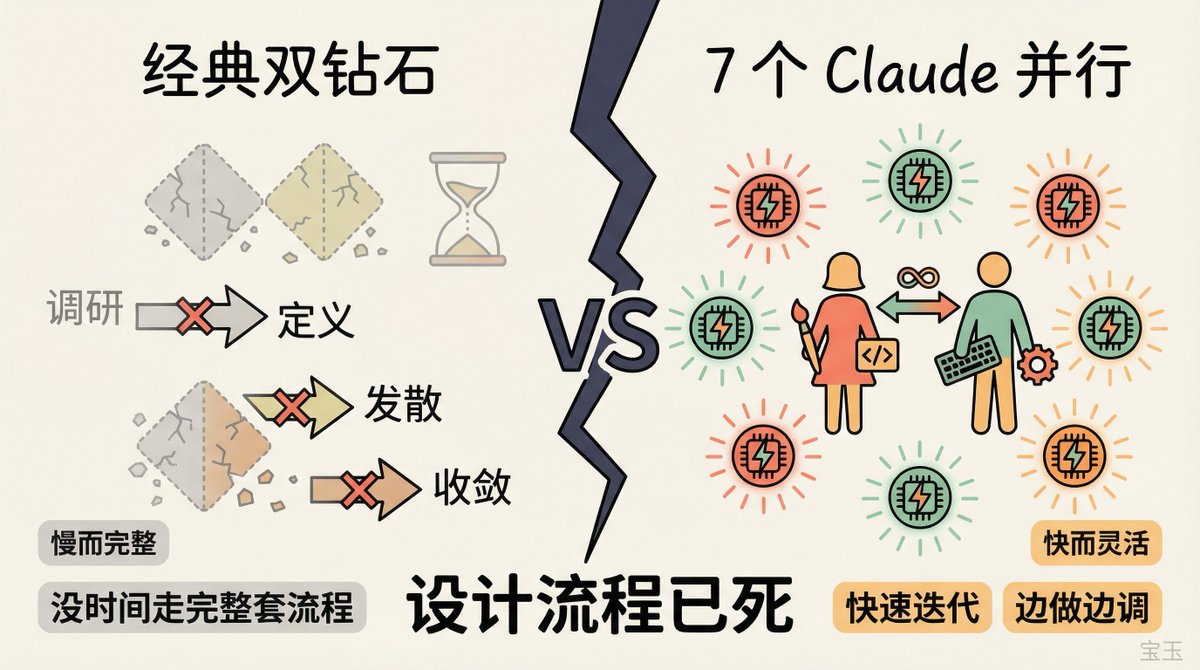
Jenny gave a speech called “Don’t Trust the Design Process” at the Hatch Conference in Berlin in September 2025, which caused a huge response. But it was only three or four months after that speech, and she felt that the content was outdated. Especially after Opus 4.6 was released and so many people discovered Claude Code during the holidays, the design process changed faster than she expected.
She divides her current design work into two categories. The first category is to support execution. Engineers work at high speed. Anyone can propose an idea and let the engineer (or AI) make a rough version to try. The designer has more of a consultant role, rather than drawing a design draft before delivering it. The second category is to create vision and direction, but the form has also changed: in the past, you could create a design vision for 2 or even 10 years and make a beautiful story-based presentation; now the vision can usually only be seen 3-6 months later, and the form is sometimes just a prototype that can point the direction.
You’d better get out of their way and let them do it.
(“You’re better off not blocking that, letting them cook.”)
Lenny asked: Are all companies experiencing this change, or is it just AI labs?
Jenny says the response to her Berlin talk was stronger than expected. Product managers are using Claude Code for prototyping, and designers are using v0 for development. But there is also a lot of opposition: some designers have invested their entire careers in this process, and they are unwilling to accept that “we can do without research and discovery.”
Regarding “quick release or careful polishing”, Jenny believes that it depends on the specific situation. But there is a fundamental reason for AI products that makes rapid iteration particularly important: AI models are non-deterministic, and you cannot simulate all states in the design draft, or even make meaningful clickable prototypes. You must use real models and see how real users use it to discover the real usage scenarios.
[Note: Non-deterministic means that the same input may produce different outputs. The traditional “draw all interface states” approach fails in AI products because AI responses are inherently unpredictable. 】
A day in the life of a designer at Anthropic
Lenny asked a very intuitive question: What do you do on a daily basis when designing in an AI lab?
Jenny says she spends a fair amount of time “keeping up”. There are many teams inside Anthropic prototyping and testing new ideas at any given time, and projects with various codenames are advancing.
Our Slack is a gold mine.
(“Our Slack is a gold mine.”)
From advances in model capabilities to internal debates about where the industry is headed, she wants to keep up. This information is directly useful in her work: she needs to anticipate what might come next so she can prepare for the design in advance.
In addition to information follow-up, Jenny’s daily life is roughly like this: part of the time is reserved for traditional design thinking; a lot of time is spent colliding with engineers, talking, whiteboarding, watching what they have made, and giving feedback; and part of the time is directly polishing the code.
Regarding the change in time allocation, she gave a clear comparison of numbers:
- A few years ago: 60-70% doing design drafts and prototypes, 20% cooperating with engineers, and 10% holding coordination meetings
- Now: 30-40% is working on design drafts and prototypes, 30-40% is working directly with engineers, and there is an extra piece – writing code to implement it yourself.
XIMGPH_4
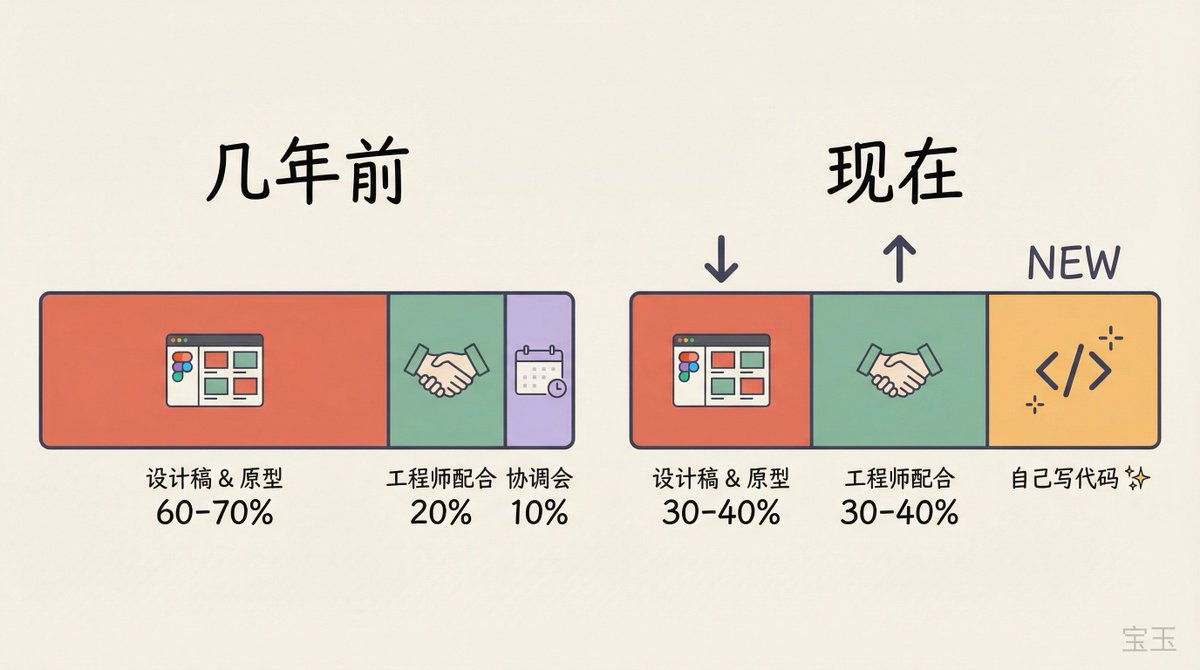
When working with engineers, her focus is on explaining the “why.” It’s not “the button shouldn’t be here”, it’s “I think there should be a button because user research shows that not everyone knows that this feature can be triggered with a prompt word”. She will also try to guide engineers to use ready-made components in the design system, because Claude does not always automatically use the design system when writing code.
Her AI tool stack: Claude Chat has been basically replaced by Claude Co-work, because most of her usage scenarios are long-running tasks. Claude Code is mainly used in VS Code. When doing front-end polishing, you need to read the code and talk to Claude at the same time. A way of working that she finds particularly interesting: someone says “this icon is off-center” in Slack, and @ Claude, Claude automatically changes the code and submits it, and she merges it directly and completes it.
[Note: Claude Co-work is a desktop AI agent product launched by Anthropic in January 2026. It can operate files on the user’s computer and complete non-coding knowledge work such as document generation and data sorting. 】
Is Figma still useful?
Given Jenny’s background in Figma, Lenny directly asked this question that many people care about.
Jenny says she still uses it and thinks Figma is still important, but not for the same reasons as before.
The problem with code tools is that they are too linear. If you use Claude Code to go in one direction, you will continue to iterate and deepen in that direction. But good design requires thinking of 8-10 different ways of doing it, throwing a bunch of ideas at the wall, and then sifting and pushing yourself to explore more possibilities. For this kind of divergent exploration, Figma’s canvas still does it best.
Another value is fine visual fine-tuning. Comparing different layouts, fonts, and style directions side by side on the canvas is much more efficient than switching repeatedly in the code.
XIMGPH_5
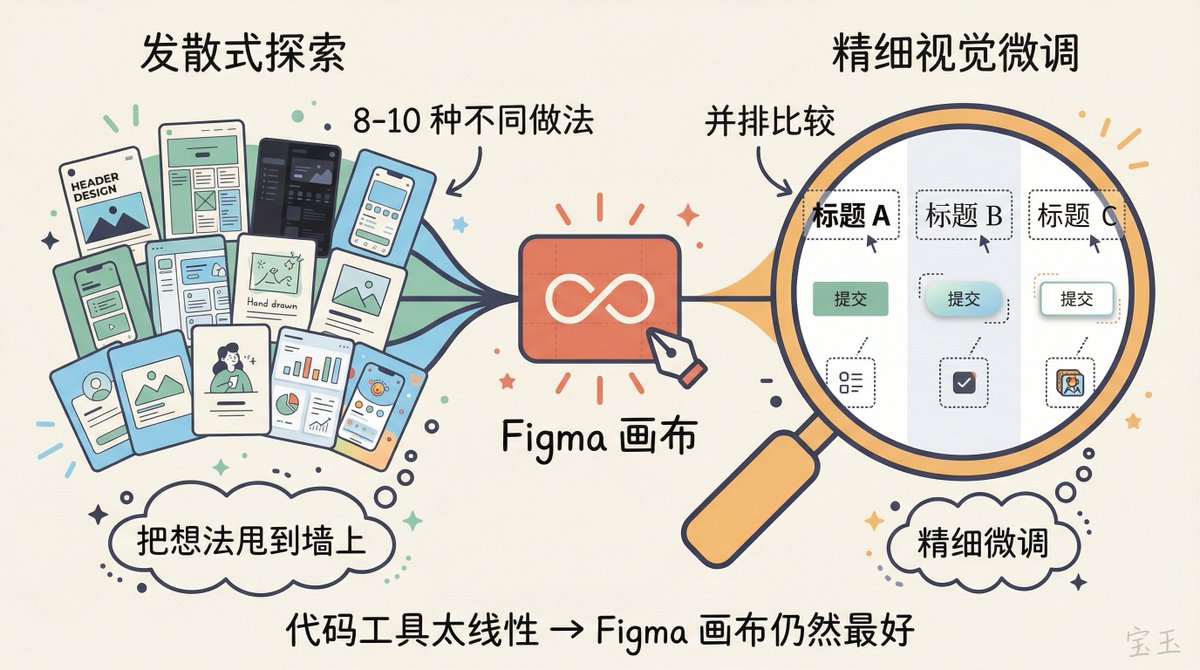
Lenny observed an interesting phenomenon: In the engineering field, IDEs are being replaced by command lines and agents, and engineers feel that IDEs are “not cool anymore.” But for designers, IDEs have become a useful tool, because sometimes it is much faster to change a CSS style directly than to describe it to Claude. Maybe IDEs are becoming tools for designers and product managers, and engineers have moved on.
The hardest part of building software is not building it
Lenny quotes Lex Fridman and asks Jenny: As AI gets smarter and smarter, where is the value of the human brain?
He mentioned what Boris Cherny, the head of Claude Code, said recently on the show: Claude Code no longer just writes code, it starts to help him think of ideas and decide what to do. This made Lenny re-examine the assumption that AI will never make the same judgments as good product managers and designers.
[Note: Boris Cherny, the creator and leader of Claude Code, said in Lenny’s Podcast in February 2026 that “encoding is basically solved” and Claude Code now begins scanning feedback, defect reports, and telemetry data to proactively suggest improvements. 】
Jenny believes that AI will get better and better at taste and judgment. “We may be too obsessed with this.” But she points to a more fundamental problem:
The hardest part of building software is actually not building it.
(“A lot of the hard parts of building software are actually, like, not building it.”)
Thinking back to the most difficult moments in your work, it is often not the technical implementation, but the debate between you and another person about “whether this function should be done” and “what should be done.” AI can provide reference opinions for this kind of decision-making disagreement between people, but it cannot solve it for you.
XIMGPH_6
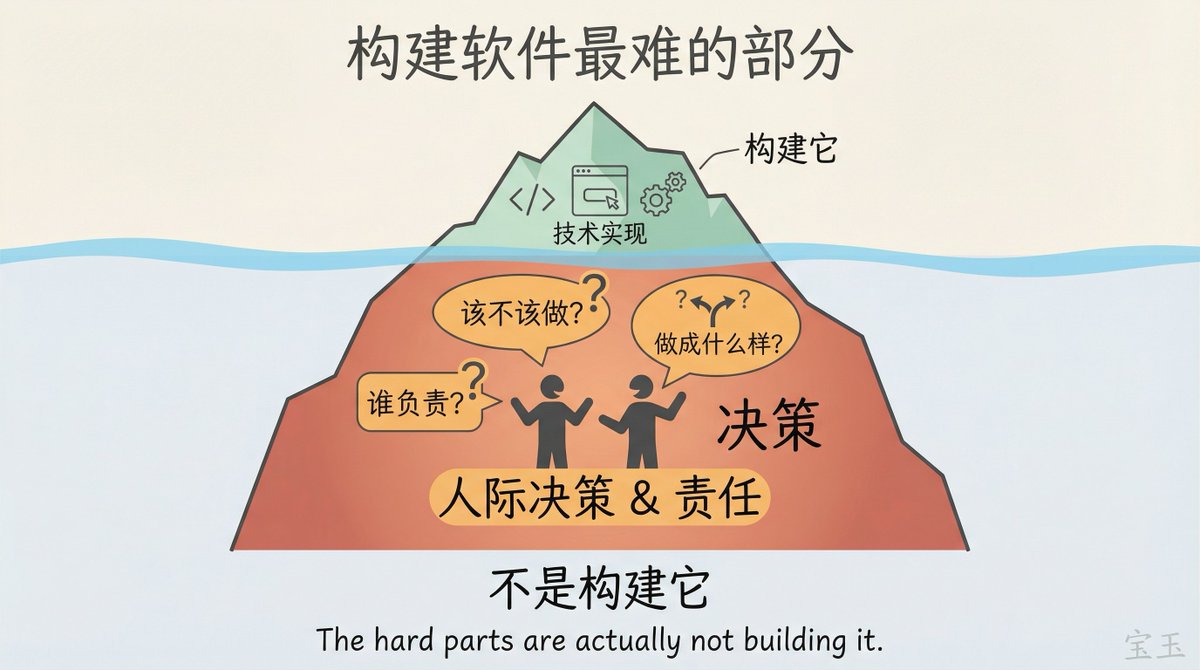
Just like Claude can now help engineers write code, engineers are still responsible for “whether this code is correct” and “whether it is appropriate to put it in the product.” The same goes for design and product decisions, where decisions and responsibility still fall on people.
Lenny added with a radiology analogy: AI may be better at diagnosis than radiologists, but you still need a human to sign off because someone has to take responsibility when something goes wrong.
Jenny also acknowledges that we may be underestimating how quickly AI will get better in these areas.
Chat or graphical interface
Lenny said no one thought chatbots and terminals would become lasting interfaces for AI, but instead of disappearing, they are getting further and further away.
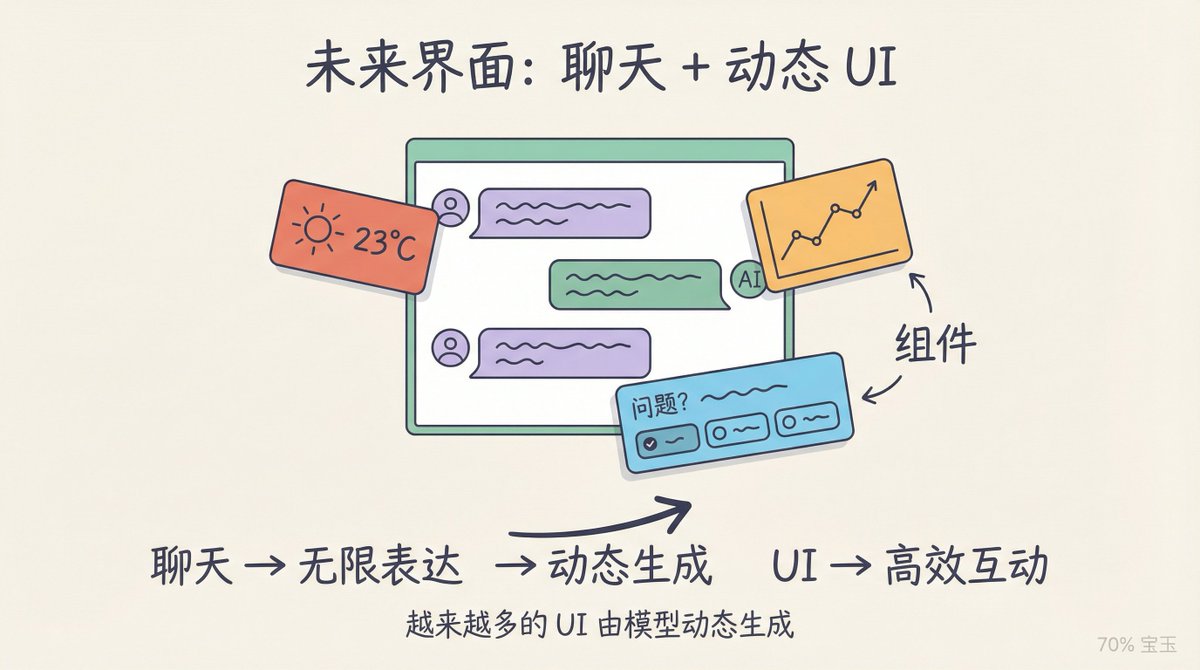
Jenny thinks the future will be a combination of both: clickable graphical interfaces plus conversations. Claude recently released a series of widgets (weather, stocks, multiple choice questions, etc.) and the response from users has been great because people still like to see the UI, click on them, and interact with them, which is much more efficient than typing.
But the chat paradigm opens a huge door, giving you infinite ways to communicate with computers. So chat won’t go away, but the UI will still be more straightforward for specific tasks. The future trend may be: more and more UIs are dynamically generated by models rather than handwritten by engineers one by one.
XIMGPH_7
Lenny mentioned a point made by Kevin Weil: Language is an interface that spans all levels of intelligence. You can chat with someone with an IQ of 200, or you can chat with someone who is not that smart. Language applies to both. So as the model gets smarter, the conversation still works.
[Note: Kevin Weil is the chief product officer of OpenAI and previously served as an executive at Instagram and Twitter. 】
Returning from Director to IC: What this year taught me
Jenny has managed a design team of 12-15 people plus several design managers at Figma, and is a serious design director. But when she went to Anthropic, she chose to be an IC (Individual Contributor, individual contributor).
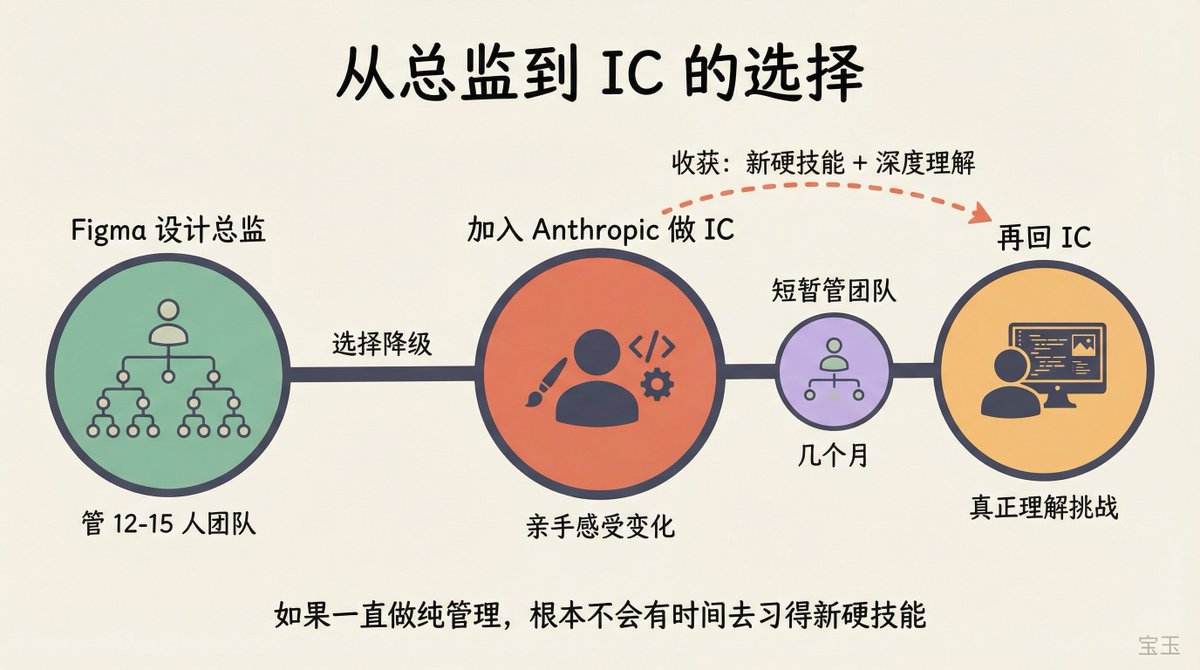
On the one hand, she wants to experience the changes in tools and processes firsthand in the AI era. On the other hand, she has real anxieties about the future of middle management. In the context of AI changing the way work is done, will management roles persist?
During this year at Anthropic (first working as IC, briefly managing the team for a few months, and then returning to IC), she felt that she had gained a lot. The design process has changed so fast in the past year that if she had been doing pure management, she would never have had time to acquire these new hard skills. If she manages a team again in the future, this experience will allow her to truly understand the challenges faced by the team instead of just scratching the surface.
She suggested that design managers should also do “practical rotations” similar to engineering managers, spending a few months doing IC to understand technical changes, and then go back to manage the team.
Lenny asked her what she found most uncomfortable with returning to IC. Jenny smiled and said: Accept criticism. As a designer, you have to present your work in front of a team and receive critical feedback. This is a very fragile process, and management positions can become rusty after a long time.
Regarding the future of management, Jenny believes that as long as there are teams, managers will be needed. But future managers will need to be able to give team direction and do some IC work at the same time, and pure “people management” as a stand-alone role may not be enough.
The real story behind Co-work
Boris Cherny said on Lenny’s show that Co-work was made in 10 days, a figure that went viral. Lenny asks Jenny what the actual situation is.
Jenny corrects this impression: 10 days is the sprint from internal release to external release. Prior to this, the team had done a lot of prototypes and explorations on different Agent frameworks. They had tried many solutions on how to display the to-do list, what form to use for multiple-choice questions, and how to teach users to understand usage scenarios.
XIMGPH_9
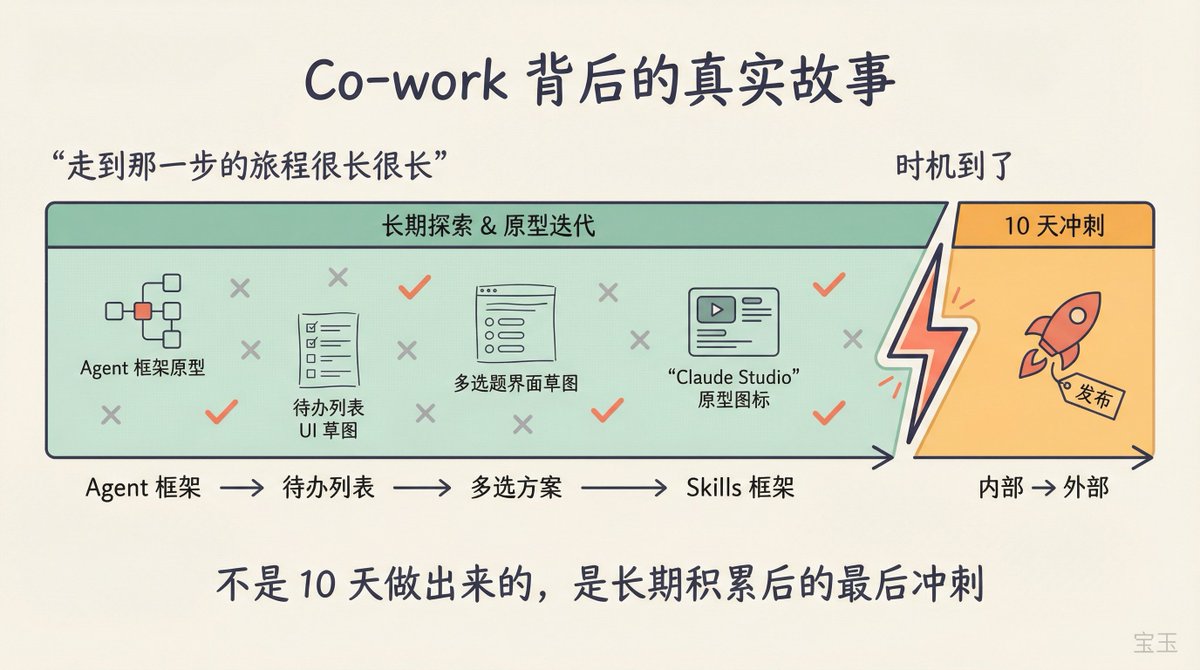
The idea kept coming back and forth, and then suddenly, the time came and it felt like it had always been so obvious. But the journey to get there was long, long. (“The idea kept coming back, and then all of a sudden, it’s the right moment, and it feels like it was so obvious all along. But there was a long, long journey to get there.”)
Regarding the release strategy, Jenny said that Co-work was not perfect when it was released, but the team used it a lot internally and was convinced that it had real value and was worthy of being experienced by external users. The key is to deliver on your promise after launching.
What really hurts a brand is releasing an early version and then doing nothing.
(“The way that you really lose trust around quality… is if you release it early and then nothing ever happens.”)
Lenny sums up this philosophy as “building trust through speed.” Jenny added that it’s not just about speed, but also about making users feel like “my feedback has been heard and used.” After each new version of Anthropic releases, team members respond to user feedback on Twitter, quickly fix issues, and publicly demonstrate progress.
Lenny asked her what she was most proud of about Co-work. Jenny said she was most proud that they posted it. Because when designers look at their own works, they will always see only flaws.
Lenny asked how to describe Co-work in one sentence. His own term is “Claude with hands” (Claude with hands). Jenny says she likes this, but her own description is more down-to-earth: What Co-work is good at is that you throw a bunch of messy stuff at it, and it helps you create a neat and useful result.
Her current iteration direction:
- Make Co-work’s homepage more like a shared task list between you and Claude
- Think about whether Co-work will always only live on the screen, and whether it can be extended to other work interfaces
The three types of designers you most want to hire
Lenny asked what to look for when hiring a designer in a time when everything is changing.
Jenny said that you must first be resilient and adaptable, and be willing to try new methods and learn new tools, rather than clinging to old processes.
More specifically, there are three types of people she is most interested in right now:
The first type: block-type strong generalist. Not the kind of person who has a little bit of everything but nothing deep, but the kind of person who has reached the 80th percentile level in multiple dimensions. The traditional T-shaped person is one deep and many shallow, while the square-shaped person is deep in several directions. This kind of person is particularly valuable in an era when role boundaries are blurred, and the work of designers is extending in the direction of product managers and engineers. Jenny also admits that such people are rare.
Second type: Deep T-shaped expert. The vertical bar of the T is much longer than most people, ranking in the top 10% of the industry in a certain field. It may be a designer with extremely strong skills, basically equal to half an engineer, or it may be a top master of visual design or icon design. Deep expertise can make the difference when everyone can make something “okay” with AI.
The third type: fresh graduates with ingenuity. Early career stage, but his maturity exceeds his age, he learns things quickly, and he has no fixed process thinking. Most companies are competing for senior talent, but precisely because the rules are changing, a quick learner with a clean slate may have an advantage over a veteran with a head full of old processes.
Advice to young designers: Make more things and don’t be limited by “less experience”. Jenny mentioned the Socratica community at her alma mater, the University of Waterloo, a community of student makers who work together offline every week, making projects and then presenting them. Someone built a Claude-powered robot, someone put cartoon eyes on Boston buses. This kind of “I just want to do something” action is what makes people stand out.
[Note: Socratica is a student community founded at the University of Waterloo in 2022 and has now expanded to more than 30 cities around the world. 】
Regarding “should designers learn to code?” Jenny’s advice is pragmatic: you don’t need to learn React from scratch, but you should include AI coding tools in your toolbox. As models and products get better, the abstraction layer will continue to move up, and designers will no longer need to understand how each line of code runs.
Lenny asks a tough question: How good is Claude as a designer? Would you hire it?
Jenny is direct: not qualified yet. Claude didn’t fit into any of the three archetypes she mentioned. It was OK for doing first drafts and showing off different options, but nothing that made you think, “This is special and worth hiring.” But she also said that Claude has improved a lot in this area in the past year.
Counter-intuitive wisdom for managers
The second half of the interview turned to team management. Jenny shared several interesting points.
low leverage time
Management training will teach you to use a 2×2 matrix to classify work, “things only I can do” and “things others can do,” and then cut out the “low-leverage” things. But Jenny observed that the leaders she respected most often actively chose to do “low-leverage” things that, precisely because they were doing them, became high-leverage.
For example, executives spend a lot of time testing products, reproducing problems, and reading logs with engineers to dig out details. If the leader does it himself, he will build a deep familiarity with the product and send the signal to the team that “nothing is cheap.” Mike Krieger’s personal code submission is an example. For another example, a leader personally makes a carefully designed commemorative card for employees. The administration can do this, but the leader himself conveys a completely different message.
[Note: Mike Krieger is the co-founder of Instagram. He joined Anthropic as chief product officer in 2024 and transferred to the Anthropic Labs team in early 2026. 】
A culture of complaining
When team members are willing to joke with each other, or even dare to joke with managers, it shows that they are not afraid of you and trust you. People on Jenny’s previous team would imitate her mantra in design review meetings: “OK, what’s next?” This showed that they understood her and were not afraid of her.
But this must go hand in hand with high standards. She uses the analogy of a “strict parent”: the team knows you won’t fire them arbitrarily, but they also know you demand the best work. With psychological safety as a foundation, it becomes easier to set high standards. Lenny sums it up as the classic formula of Radical Candor: caring deeply and challenging directly.
readability matrix
The third topic comes from Evan Tana’s “Legibility Framework”. The two axes of the matrix are: whether the founder is “readable” (others can understand it at a glance), and whether the idea is “readable”. If both the founder and the idea are highly readable, then there is a high probability that someone is already working on this opportunity. The most valuable ones are often in the “idea unreadable” quadrant, where others cannot understand but where energy is gathering.
[Note: Evan Tana is a partner at SPC (South Park Commons, Silicon Valley Entrepreneurship Community and Fund). 】
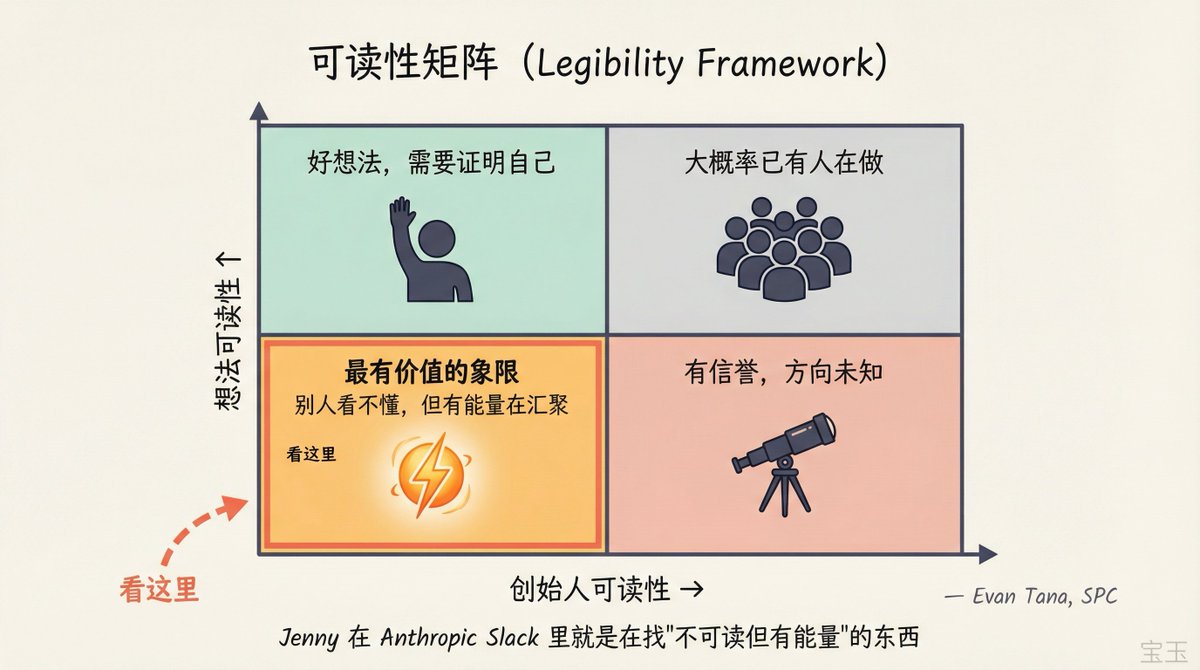
Jenny uses this framework in her daily work: when she browses various internal prototypes in Anthropic’s Slack, she is looking for things that are “unreadable” but have power.
A specific case. Last year, someone inside Anthropic made a prototype called “Claude Studio”. The interface was very dense and complex, built on some kind of Agent framework. When Jenny first saw it she was like “I don’t know what this is”. But she noticed that the research team and internal users were very excited about it. Rather than ignore the signal, she chose to dig deeper. Ultimately, the core concepts from that prototype, such as the Skills framework (a Markdown file that guides Claude on how to complete specific tasks), and the UI that displays Claude’s plans and to-do items, were extracted and put into the design of Co-work.
Lenny adds a related finding: Research he and venture capitalist Terrence Rohan have shown shows that people who join early on in companies that become wildly successful (e.g., Palantir, Stripe, Linear, OpenAI) see three signals: the idea sounds crazy, there are people who are extremely excited about it, and the founders are in the top 1%.
Jenny says this is consistent with her experience: when you see something you don’t understand but someone is excitedly investing in, it’s worth learning more about it. Early creators often don’t know why they’re excited and need someone to help them transform their fuzzy energy into a clear product.
Lightning Q&A
Recommended book: “The Power Broker” (Robert Caro, about the life of Robert Moses), 1100 pages. Jenny says reading a biography that spans decades is particularly valuable in an age when attention spans are scarce. The other is Insomniac City (by Bill Hayes), a memoir about the final days of scientist Oliver Sacks.
Favorite movie recently: “A Sentimental Value,” a new film from Norwegian director Joachim Trier (who also directed “The Worst Man in the World”), about a family’s relationship with the house they’ve lived in all their lives. There’s also The Pit Season 2. It’s great to watch extremely capable people doing what they’re good at.
Favorite product: Retro, a small circle photo sharing app that can only share photos from the current week, without the counting and advertising of social media. After using it for two years, I can look back at “what I was doing this week two years ago” and it has become a way to record life.
Life motto: “It is what it is.” It sounds like resignation, but Jenny says that in a world where everything is changing, this sentence can give you the sense of relief you need to keep moving forward.
The coolest use of Co-work: Jenny threw all her years of notes (one-on-one notes, random thoughts, small memos, interview notes) to Co-work and let it analyze what she values when evaluating her design skills. The output was an evaluation rubric she didn’t realize she had. When AI can help you discover your own implicit thinking patterns, that is valuable in itself.
There is only one core clue throughout Jenny’s podcast: change is not initiated from within the design world, but the explosion in engineering efficiency has pushed designers into a position where they must change. Designers need to change from being the gatekeeper of the process to being the guide, and from being the person who draws the design draft to being the person who can polish the code.
One sign worth paying attention to is Jenny’s reference to Co-work’s next step: “Is it ever going to live only on the screen”. This suggests that Anthropic may be exploring ways to allow AI agents to access more work interfaces, rather than cramming all interactions into a chat window.
Another unanswered question is how quickly AI can evolve in taste and judgment. Jenny admits that Claude is not currently qualified to be hired as a designer, but says he has “made a lot of progress in the past year.” The gap is narrowing, and no one knows to what extent it will trigger another change in the industry.
The Anthropic design team is hiring. If the idea that the design process is dead excites you rather than scares you, Jenny says welcome.
Full interview video:https://www.youtube.com/watch?v=eh8bcBIAAFo
source
author:Baoyu
Release time: March 3, 2026 06:34
source:Original post link
Editorial Comment
This repost, "[Repost] X Import: Baoyu – The design process is dead: Anthropic design leader Jenny Wen talks about design changes in the AI era", deserves to be read as a field note instead of a slogan. The source does not only present a claim; it also shows the situation where that claim appears to work, and that distinction matters if you are trying to turn information into decisions. A practical reading starts by separating portable methods from one-off anecdotes. IntroductionThe following content is compiled by VIPSTAR in combination with X/social media public content and is for reading and research reference only.
From an editorial angle, the first value of this piece is signal density. You can quickly identify assumptions, boundary conditions, and implicit costs behind the headline conclusion. That is more useful than simple agreement or disagreement. focusJenny Wen is Claude Design Lead at Anthropic and currently leads Claude Co-work’s…This episode of Lenny's Podcast talks about five major things: why the traditional design process has come to an end, what it is like to design in an AI laboratory,… If you manage product, content, or operations, this is where you decide whether to test, postpone, or reject an idea.
The second value is timing. Many tech narratives are technically correct but operationally late. By the time a pattern becomes mainstream, the edge is gone. This text still helps because it frames implementation choices in a way that can be tested in small scope before full rollout. RemarkFor parts involving rules, benefits or judgments, please refer to Baoyu’s original expression and the latest official information. In practice, small controlled trials beat broad commitments when uncertainty is high.
A sober read also requires risk accounting. Even strong ideas can fail because of compliance limits, platform policy changes, distribution bottlenecks, or team capability gaps. Editorial commentsThis article "X Import: Baoyu – The design process is dead: Jenny Wen, head of Anthropic design, talks about design changes in the AI era" comes from the X social platform and is written by Baoyu. Treat those as first-class variables. If your organization cannot absorb these risks yet, the right move is often staged adoption rather than immediate expansion.
For builders and operators, a useful checklist is simple: define the outcome metric, define the failure threshold, cap the test budget, and set a review date before execution begins. Judging from the completeness of the content, the density of key information given in the original text is relatively high, especially in the core conclusions and action suggestions, which are highly implementable. This turns content consumption into an executable loop. Without this loop, good information often becomes passive knowledge that never produces results.
Another reason this source is worth reposting is that it supports comparative reading. It can be paired with adjacent cases to examine what is stable across contexts and what is merely local noise. Jenny Wen is the Claude Design Lead at Anthropic and currently leads the design efforts at Claude Co-work. If a conclusion survives comparison across teams and timelines, confidence should rise; if not, preserve optionality and avoid irreversible commitments.
Editorially, our stance is straightforward: prioritize verifiability, portability, and downside control. Before joining Anthropic, she was the design director at Figma, where she led the entire process from concept to launch for FigJam and Slides. We recommend readers keep the original source link (https://x.com/dotey/status/2028599757820613086) as a reference anchor, then document their own test notes after execution. The real value of reprinted content is not repetition; it is the quality of the second judgment and the discipline of local implementation.