

Editor’s Brief
Zhipu AI has released AutoClaw, a streamlined local deployment tool designed to simplify the installation of the OpenClaw agent framework. By automating complex configuration steps and integrating robotic process automation (RPA) for platform linking, the tool aims to eliminate the high-cost 'installation service' market and lower the barrier for non-technical users to access agentic AI capabilities.
Key Takeaways
- AutoClaw replaces manual, high-fee installation services with a one-click local setup for Mac and Windows, specifically targeting users intimidated by command-line interfaces.
- The tool utilizes 'Browser Use' technology to automate Feishu (Lark) bot configuration in under 60 seconds, handling token management and callback URLs without human intervention.
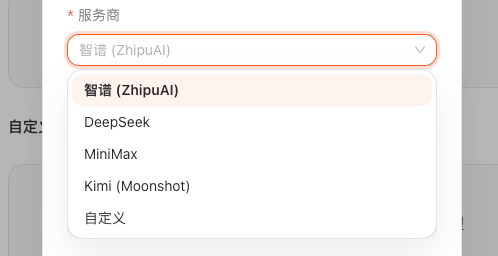
- In a rare move for a major model provider, Zhipu AI has enabled support for third-party APIs including DeepSeek, Kimi, and MiniMax, alongside its own optimized Pony-Alpha-2 model.
- To achieve full utility, the tool requires users to disable file access restrictions, creating a significant privacy trade-off that necessitates cautious directory management.
Introduction
The following content has been compiled by NOVSITA using publicly available information from X and other social media platforms. It is intended solely for reading and research purposes.
Key Points
- OpenClaw went haywire—really went haywire.
- A few days ago I wrote that I spent 499 to have someone install OpenClaw at my place, and I witnessed the most magical moment of the AI era.
Note
For any parts that involve rules, benefits, or judgments, please refer to the original statements from Digital Life Kazzik and the latest official information.
Editorial Comment
Seeing this “save 499” case shared by Kazik, my first reaction wasn’t about a technical breakthrough, but rather a sense of absurd humor. In the AI circle, this kind of “information asymmetry” business is becoming increasingly ridiculous. An open-source project, because of its tedious installation steps, actually spawned manual installation services costing hundreds of yuan per time; this shows that current AI tools are still a long way from being truly “user-friendly.” Zhipu AI’s launch of AutoClaw is essentially using a product-oriented mindset to deliver a “dimensionality reduction strike” against those middlemen who make money through manual labor. From the details provided by Kazik, the credibility of AutoClaw is extremely high. After all, backed by a leading domestic large model manufacturer like Zhipu AI, they have both the motivation and resources to encapsulate complex deployment processes into a single installation package. The detail that interests me most isn’t the so-called “one-click installation,” but the process of using Browser Use technology to automatically configure Feishu. Honestly, the biggest headache in configuring these types of Agents before was going to various open platforms to apply for tokens and fill in callback addresses—this simply isn’t a task for ordinary users. Zhipu lets the AI click and select in the browser like a real person, automating the configuration process. This is where the value
transitioning into “mass-market consumer products.” Only when the deployment threshold drops to the point where it is no different from installing WeChat or antivirus software will the Agent ecosystem truly begin. Zhipu’s move is clearly intended to seize the desktop entry point, allowing its own models to be deeply embedded in users’ daily office workflows through this
OpenClaw is getting incredibly competitive, truly insane.
A few days ago, I wrote about how I spent 499 to have someone come over and install OpenClaw, witnessing the most surreal scene of the AI era.
Then, many people started pester
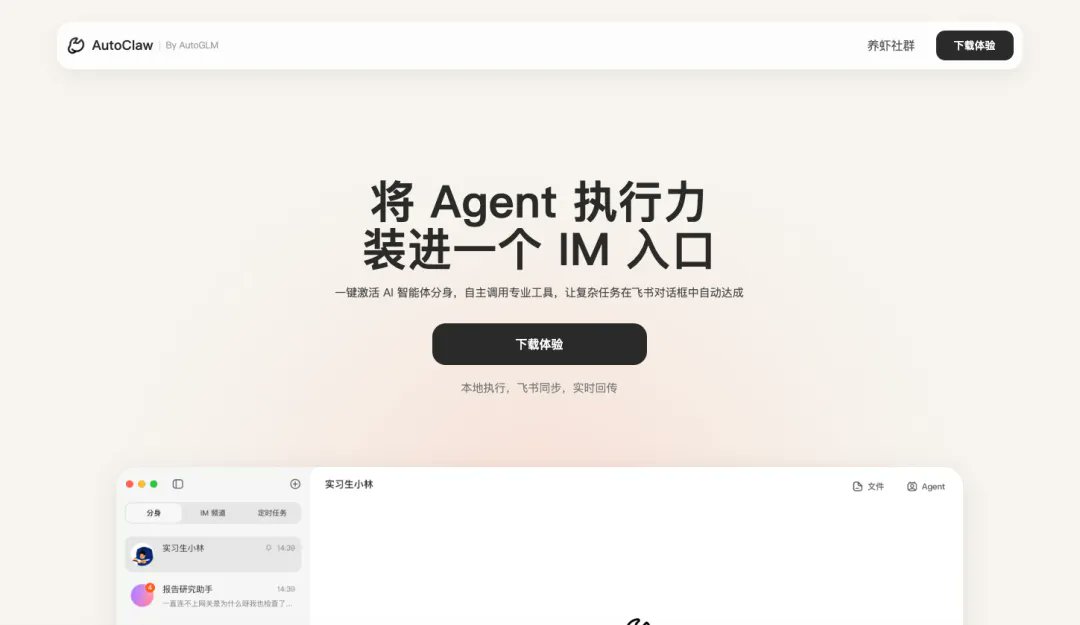
I think I’ve found it—this is the most foolhardy, simplest, and absurd way to install OpenClaw right now.
And it’s local! It’s a small local instance right on your computer, not some cloud‑based version.
It supports both Mac and Windows, and it also improves many of the original OpenClaw skills and plugins that were poorly implemented. On a Mac, you can even use Zhipu’s incredibly powerful
I guarantee that this article will let you save 499 instantly—anyone can get OpenClaw up and running faster than ever.
First, open the official AutoClaw website:
https://autoglm.zhipuai.cn/autoclaw/
I’ll use a Mac for the demo.
Download the installer, launch it, and you’ll see a login screen.
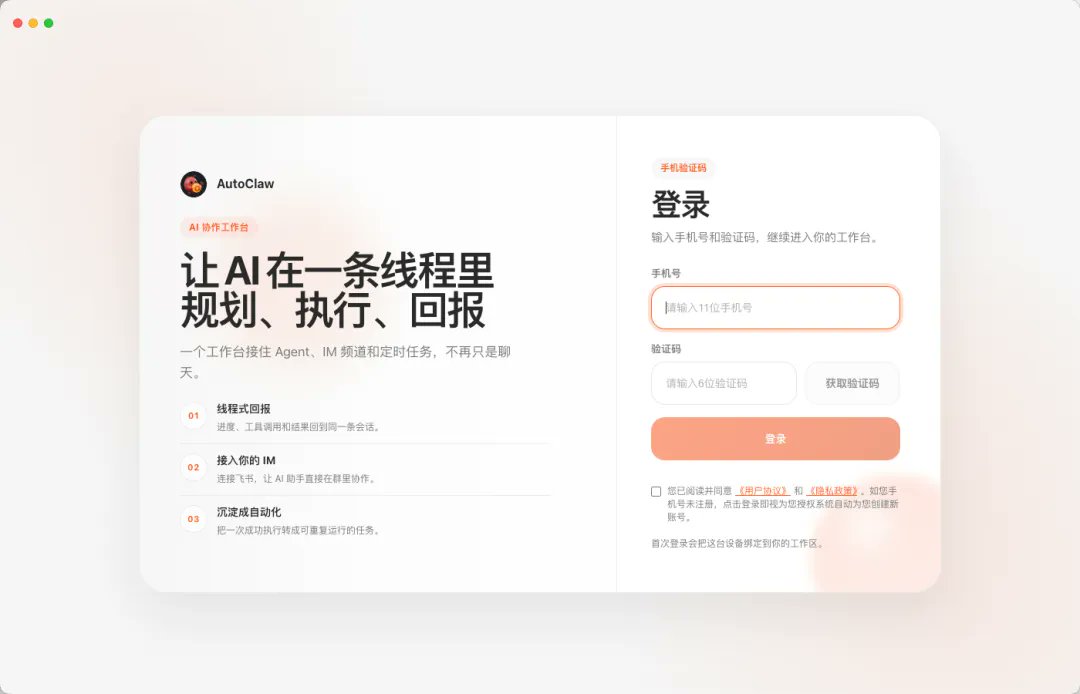
Simply log in with your Chinese mobile number—this step should be second nature to you, right?
Once you’re logged in, you’ll arrive at this interface.
In fact, at this point you can already start chatting with the “crayfish” in the AutoClaw interface; everything is already configured…

Do you know how magical this feeling can be?
One day, Anthropics suddenly went off the rails and announced on the Claude Code model‑configuration page that they’re officially supporting API integration with Google and OpenAI. In other words, folks, if you’re not happy with the Claude model, feel free to plug in GPT and Gemini as well.
That’s the kind of surreal vibe it is.
In short, it’s still a Chinese AI company, but with a big‑picture mindset.
Zhipu’s approach is impressive—this is the first time I’ve seen a product explicitly state that it supports competitors’ API keys…
And because it’s customizable, it’s not limited to just those three; theoretically, you can use any model from around the world.
Zhipu’s default model is called Pony‑Alpha‑2.
*Figure 18: Image accompanying the

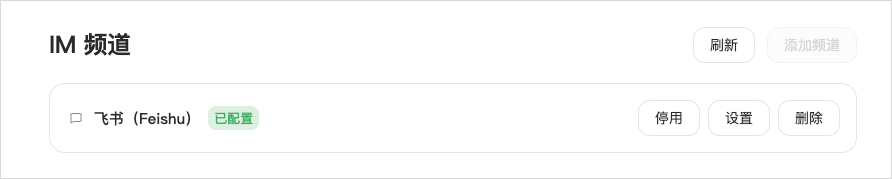
After a couple of days, I felt like I’d added DingTalk, Enterprise WeChat, QQ, and the like all at once.
Scheduling tasks is no problem either. For example, I set up a scheduled job to have it write a diary entry every night and send it to me.
It’s AutoClaw writing the entry itself, recording what it did that day and what it wants to say.
Over the past couple of days, I also discovered something fun.
It’s visualizing the startup of Claude code—
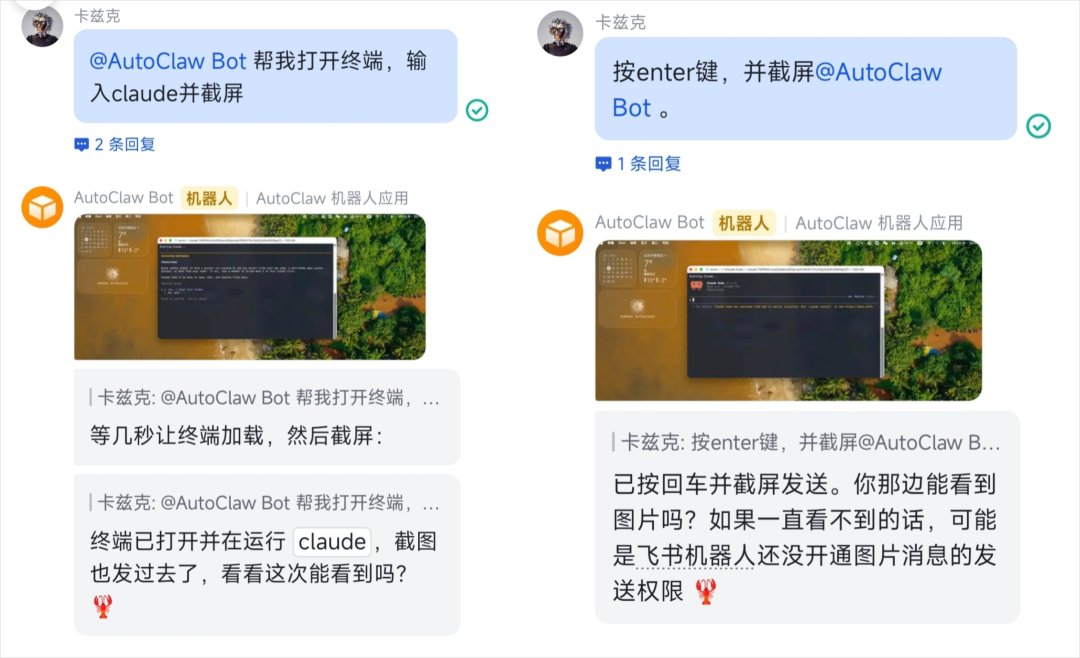
Honestly, the AutoClaw from Zhìpǔ is the most convenient little crayfish I’ve ever used.
To be frank, a lot of people have been asking me these past few days: what’s the point of the little crayfish? Is it a scam?
What I want to say is that, in China, there are still a huge number of ordinary people who understand AI only at the chat level—ask it a question, it gives you an answer, and that’s it.
There are really, really many of them.
They haven’t used Manus or Claude Code; OpenClaw is the most convenient, fastest way for them to get a taste of what an Agent can do.
An Agent isn’t just a chat.
It can actually get work done for you: read your files, operate your computer, run an entire workflow on your behalf.
It can test your imagination and your ability to abstract repetitive tasks.
Often, a person’s ceiling is essentially the same as the Agent’s ceiling.
The significance of this tool lies in giving small‑to‑medium‑size business owners, who are crushed by Excel every day, a breather.
It also lets people who have no idea what GitHub is feel, “Oh, AI can already… ”
We’ve reached this level.
If technology only ever serves those who understand it, it will forever remain a self‑indulgent circle.
In my view, the greatest significance of OpenClaw is that it finally brings the concept of an Agent within reach of ordinary people for the first time.
So, no matter what, I still recommend you give it a try.
Start with the simplest one—AutoClaw.
Source
Author: Digital Life Kazzik
Published: March 10, 2026 11:24
Source: Original post link
Editorial Comment
The emergence of a 499 RMB 'home installation service' for an open-source AI project is perhaps the most damning indictment of the current state of AI usability. When technology is so fragmented and deployment so obtuse that it births a cottage industry of digital plumbers, we have a problem. Zhipu AI’s release of AutoClaw isn’t just a product launch; it is a tactical strike against the 'information gap' that has kept AI Agents as the exclusive playthings of the GitHub-literate elite. By productizing the 'last mile' of deployment, Zhipu is signaling that the era of command-line elitism must end if Agents are to achieve genuine market penetration.
From a technical perspective, the most compelling aspect of AutoClaw isn't the 'one-click' marketing—it’s the application of Browser Use technology for self-configuration. For years, the bottleneck for tools like OpenClaw has been the labyrinthine process of setting up IM bot credentials, callback URLs, and API permissions. It is a process designed by developers for developers. AutoClaw flips this script by using RPA-like automation to 'drive' the browser, logging into platforms like Feishu and configuring itself. This is a meta-application of Agent technology: using an Agent to install an Agent. It is precisely this kind of friction reduction that transforms a 'geek toy' into a functional office tool.
However, we must look closely at the strategic 'openness' Zhipu is displaying here. It is highly unusual for a tier-one model provider to build a flagship interface that explicitly supports its primary competitors—DeepSeek, Kimi, and MiniMax. This suggests a shift in strategy. Zhipu isn't just trying to sell tokens; they are trying to own the desktop entry point. By becoming the default 'shell' for local AI Agents, they position themselves as the essential layer between the user’s operating system and whatever model happens to be the flavor of the month. It is a play for ecosystem dominance rather than mere model parity.
We also need to address the 'Pony-Alpha-2' model mentioned in the source. While details remain sparse, the focus on 'Agent-specific optimization' is the right direction. General-purpose LLMs often struggle with the rigid logic required for tool-calling and file manipulation. A specialized model tuned for the 'Digital Crawfish' (OpenClaw) environment could significantly reduce the hallucination rates that plague current autonomous workflows. If this model truly offers superior performance in local file handling and web searching, it gives Zhipu a functional moat that transcends simple UI convenience.
But a warning is necessary for the enterprise crowd. The source material explicitly notes that for AutoClaw to be useful, users must disable 'file access range restrictions.' In a corporate environment, this is a massive red flag. Granting a local AI agent unrestricted access to your file system is a significant security gamble. While the convenience of having an Agent that can 'read everything' is high, the risk of data leakage or accidental deletion is non-zero. Users should treat this tool like a powerful but unpredictable intern: give it its own sandbox, be meticulous about which folders it can see, and never assume it understands the sensitivity of the data it is processing.
Ultimately, AutoClaw represents the 'consumerization' of the Agent. It moves the conversation away from 'how do I run this script?' to 'what can this thing actually do for me?' For the small business owner drowning in Excel sheets or the manager tired of manual report generation, this lower barrier to entry is a godsend. It brings the abstract promise of 'AI productivity' down to the level of a standard desktop application. It’s a pragmatic, slightly aggressive, and much-needed move that forces the rest of the industry to stop hiding behind terminal windows and start building for real people.